
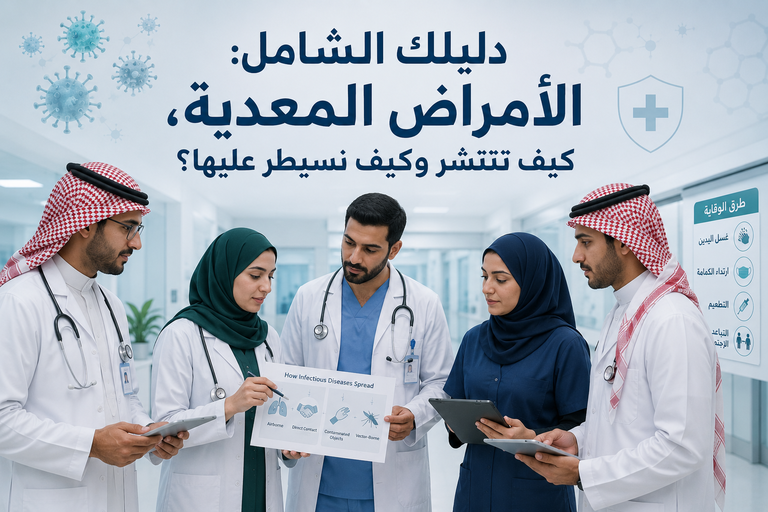
The Complete Guide to Infectious Diseases: How They Spread and How to Control Them?
In today's fast-moving world of travel, communication, and global connectivity, infectious diseases have become one of the most significant health challenges affecting individuals and communities. From common colds to global pandemics, infections can spread within hours when preventive measures and public awareness are lacking.
Although some infectious diseases may seem minor, neglecting them can lead to serious complications and widespread transmission within homes, schools, hospitals, and workplaces.
The good news is that understanding how infections spread plays a major role in reducing risks and controlling outbreaks. This is why infection prevention and control programs, along with health education initiatives, have become essential components of modern healthcare systems aimed at protecting communities and limiting the spread of epidemics.
What Are Infectious Diseases and What Causes Them?
What Are Infectious Diseases?
Infectious diseases are illnesses caused by microorganisms such as viruses, bacteria, parasites, or fungi. These diseases can spread from one person to another either directly or indirectly through air, food, contaminated surfaces, or other transmission routes.
The severity of infectious diseases varies widely, ranging from mild illnesses that are easily treated to serious conditions requiring immediate medical intervention. Certain groups, including older adults, children, and individuals with chronic illnesses, are often at greater risk of complications.
Main Causes of Infectious Diseases
- Viruses: Such as influenza, COVID-19, measles, and viral hepatitis.
- Bacteria: Such as tuberculosis, respiratory infections, and food poisoning.
- Parasites: Such as malaria and various gastrointestinal diseases.
- Fungi: Such as certain skin and respiratory infections.
Treatment methods vary depending on the causative agent, making accurate diagnosis a critical step in disease management and control.
| Pathogen | Common Examples |
| Viruses | Influenza, COVID-19, Measles |
| Bacteria | Tuberculosis, Food Poisoning |
| Parasites | Malaria |
| Fungi | Skin and Respiratory Fungal Infections |
How Do Infectious Diseases Spread Among Individuals and Communities?
How Are Infectious Diseases Transmitted?
Infectious diseases spread through several routes, including direct contact with infected individuals, inhalation of respiratory droplets, touching contaminated surfaces, consuming unsafe food or water, and transmission through insects and other disease vectors.
Understanding the modes of transmission is one of the most important steps in reducing infection rates and protecting public health.
Direct Transmission (Physical Contact and Respiratory Droplets)
Direct transmission occurs when an infection passes from an infected individual to another person without an intermediary.
- Handshakes or direct skin contact.
- Sneezing and coughing that release respiratory droplets.
- Sharing personal items.
- Close contact in enclosed spaces.
This type of transmission is one of the most common causes of infectious disease outbreaks, particularly in schools, hospitals, and public transportation.
Common examples include:
- Influenza.
- Common colds.
- COVID-19.
- Certain skin infections.
Indirect Transmission (Contaminated Surfaces, Food, Water, and Vectors)
Not all infections require direct contact. Many diseases can spread through contaminated intermediaries such as:
- Door handles and shared surfaces.
- Improperly cooked food.
- Contaminated water.
- Unsterilized medical instruments.
- Insects such as mosquitoes and flies.
Poor hygiene and inadequate disinfection practices are among the leading causes of infectious disease transmission within communities and healthcare facilities.
The Most Common Types of Infectious Diseases
Hundreds of infectious diseases can affect humans, but some are particularly widespread and have a major impact on public health.
Respiratory Diseases
- Influenza.
- Pneumonia.
- COVID-19.
- Tuberculosis.
These diseases are commonly transmitted through respiratory droplets or airborne particles in enclosed environments.
Gastrointestinal Diseases
- Food poisoning.
- Cholera.
- Gastroenteritis.
These illnesses are often associated with contaminated food and water.
Bloodborne Diseases
- Viral hepatitis.
- Human Immunodeficiency Virus (HIV).
Vector-Borne Diseases
- Malaria.
- Dengue fever.
These diseases are transmitted through insects such as mosquitoes.
Effective Strategies to Control and Prevent Infectious Diseases
How Can Infectious Diseases Be Controlled?
Infectious diseases can be controlled through vaccination, personal hygiene, regular handwashing, surface disinfection, isolation of infected individuals, and adherence to infection prevention and control measures in homes and healthcare facilities.
The greater the awareness and commitment to preventive measures, the lower the risk of disease transmission.
Vaccines and Their Role in Eliminating Epidemics
Vaccines are among the greatest achievements in medical history. They have significantly reduced mortality rates and helped control many serious infectious diseases.
The benefits of vaccination include:
- Strengthening the immune system against infections.
- Reducing severe complications.
- Limiting the spread of infectious diseases.
- Protecting vulnerable populations.
- Reducing pressure on hospitals and healthcare facilities.
Global vaccination campaigns have contributed to the elimination or significant reduction of diseases such as polio and measles.
Applying Infection Control Standards and Personal Hygiene Practices
Infection control procedures play a critical role in protecting individuals and healthcare professionals, particularly in hospitals and medical centers.
- Regular handwashing.
- Using medical-grade sanitizers.
- Wearing masks when necessary.
- Disinfecting tools and surfaces.
- Safe disposal of medical waste.
- Avoiding close contact with infected individuals.
- Following proper coughing and sneezing etiquette.
Why Have Infection Control Programs Become Essential Today?
Following recent global pandemics, the world has realized that prevention is no longer optional—it is a necessity for protecting healthcare systems and communities.
As a result, infection control programs are now in high demand across hospitals, clinics, laboratories, schools, nursing homes, and various healthcare sectors.
There is also a growing need for specialists who can implement safety protocols and reduce the spread of infectious diseases within healthcare facilities.
When Should You Consult a Doctor? (Common Warning Signs)
Some symptoms may initially appear mild but could indicate a serious health condition requiring prompt medical attention.
You should consult a healthcare professional if you experience:
- High fever.
- Shortness of breath.
- Persistent cough.
- Unusual skin rash.
- Severe vomiting or diarrhea.
- Extreme and ongoing fatigue.
- Severe body aches.
- Symptoms that do not improve within a few days.
How Can We Protect Ourselves and Our Communities?
Controlling infections is not solely the responsibility of hospitals or healthcare authorities. It begins with individual awareness and daily habits.
Always make sure to:
- Wash your hands regularly.
- Receive recommended vaccinations.
- Avoid sharing personal items.
- Maintain food and water hygiene.
- Follow public health guidelines.
- Learn the fundamentals of infection control.
Every simple preventive action can help stop an entire chain of infections.
Conclusion
Infectious diseases remain a global health challenge that requires public awareness and cooperation between individuals, healthcare professionals, and healthcare institutions. Although infections can spread rapidly, adherence to preventive measures and health education can significantly reduce risks.
Understanding disease transmission, maintaining hygiene standards, and applying infection control measures are all essential steps toward building a healthier and safer society.
Get Started Today
Help protect your community and contribute to reducing the spread of infectious diseases while advancing your healthcare career.
Enroll now in the accredited Infection Control Diploma and begin your professional journey with confidence in one of the most important and in-demand healthcare fields today.
Updated at: 2026-10-09 23:12:13