
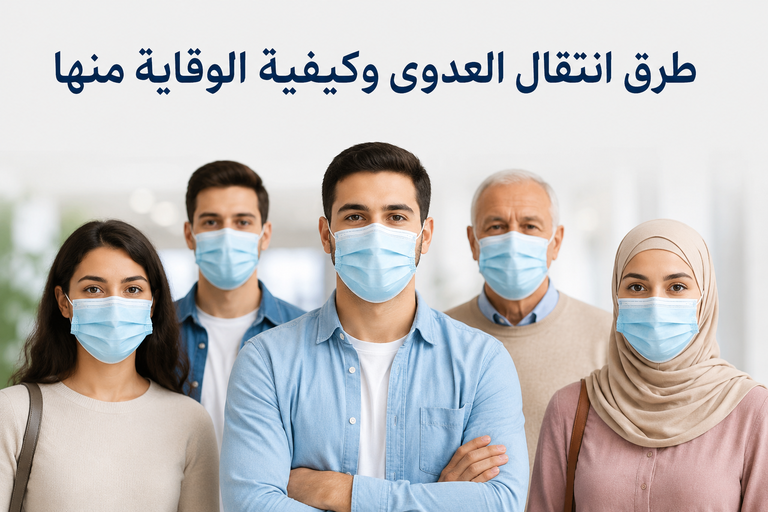
How Infections Spread and How to Prevent Them: A Complete Guide
Infectious diseases can affect not only individual health but also communities, healthcare services, workplaces, education, and economic activity. As travel, population movement, and environmental conditions change, understanding modes of infection transmission remains an important part of prevention.
Not all microorganisms spread in the same way. Some infections spread through contact, others through respiratory droplets or airborne particles, while others may be transmitted through food, water, or vectors such as insects. Prevention therefore needs to match the pathogen, transmission route, and setting.
For this reason, infection prevention and control programs are an important part of protecting patients and healthcare workers. Understanding the chain of infection can also help identify where transmission can be interrupted.
What Is the Chain of Infection and How Does It Begin?
The chain of infection describes the sequence required for an infectious agent to move from its reservoir or source to a susceptible host. Understanding each link helps identify where preventive measures can interrupt transmission.
What Is the Chain of Infection?
The commonly used chain consists of six interconnected links:
- Infectious agent.
- Reservoir or source.
- Portal of exit.
- Mode of transmission.
- Portal of entry.
- Susceptible host.
| Link | Meaning |
|---|---|
| Infectious Agent | A microorganism capable of causing infection, such as certain bacteria, viruses, fungi, or parasites. |
| Reservoir / Source | Where the infectious agent lives or is present, including humans, animals, or environmental sources. |
| Portal of Exit | The route through which an agent leaves its reservoir, such as respiratory secretions, blood, or other body fluids. |
| Mode of Transmission | How the agent moves to another host, such as contact, droplets, airborne spread, food or water, or vectors. |
| Portal of Entry | The route through which an agent enters the body, including mucous membranes, the respiratory tract, or breaks in the skin. |
| Susceptible Host | A person who may become infected depending on immunity, health status, exposure, and other risk factors. |
The Most Common Modes of Infection Transmission
Modes of infection transmission vary by infectious agent, and some microorganisms can spread through more than one route.
What Are the Modes of Infection Transmission?
Common routes include direct contact, indirect contact through contaminated objects, respiratory droplets, airborne transmission, food- or water-borne transmission, and vector-borne transmission.
Direct Contact Transmission
Direct contact transmission occurs when an infectious agent passes directly between people through contact involving skin, body fluids, or infected tissue, depending on the disease.
Indirect Contact and Contaminated Objects
Some microorganisms can spread through contaminated equipment or objects, sometimes referred to as fomites. Appropriate cleaning, disinfection, and reprocessing are therefore important in healthcare settings.
Droplet Transmission
Respiratory droplets produced during coughing, sneezing, or speaking can transmit certain infectious agents to a nearby person's mucous membranes. The required precautions depend on the specific pathogen and setting.
Airborne Transmission
Some infectious agents can be carried in small airborne particles that remain suspended for a period of time. Ventilation and appropriate infection-control precautions become particularly important when airborne transmission is relevant.
Food- and Water-Borne Transmission
Some infectious diseases can spread through contaminated food or water, making food safety, clean water, and sanitation important preventive measures.
Vector-Borne Transmission
Certain insects and other vectors can carry infectious agents between hosts. Examples include diseases transmitted by mosquitoes or ticks, which require different prevention approaches from infections spread directly between people.
Read Also
How Can Infectious Diseases Affect Society and the Economy?
Large outbreaks can affect healthcare capacity, workplaces, education, and economic activity, although the scale of impact depends on the disease, the size of the outbreak, and the response.
- Increased pressure on healthcare facilities and workers.
- Greater demand for diagnosis, treatment, and healthcare resources.
- Absence from work or school.
- Disruption of selected services or economic activities.
- Higher spending on response and prevention.
How Can Infection Be Prevented?
Effective prevention depends on the route of transmission and the context of exposure. No single preventive measure can stop every infectious disease.
How Can Infectious Diseases Be Prevented?
Risk can often be reduced through appropriate hand hygiene, respiratory hygiene, adequate ventilation, recommended vaccination, safe food and water practices, environmental cleaning when indicated, and public-health guidance specific to the infection.
- Clean hands appropriately and at relevant times.
- Follow respiratory hygiene and cough etiquette.
- Support appropriate ventilation in indoor spaces.
- Clean and disinfect surfaces or equipment when indicated.
- Avoid sharing personal items that may transmit certain infections.
- Follow vaccination recommendations appropriate to age, health status, and local guidance.
- Follow mask, isolation, or additional precaution guidance when indicated for a specific infection.
The Role of Healthcare Workers and Standard Precautions
In healthcare, standard precautions are the minimum infection prevention and control practices used during the care of all patients, regardless of whether infection is known or suspected.
Core elements include:
- Risk assessment.
- Hand hygiene.
- Respiratory hygiene and cough etiquette.
- Appropriate PPE based on exposure risk.
- Aseptic technique where required.
- Safe injections and sharps practices.
- Environmental cleaning.
- Safe handling of linen and healthcare waste.
- Decontamination and reprocessing of reusable equipment.
Transmission-based precautions may be added when a suspected or confirmed infection requires additional measures based on how it spreads.
Why Study Infection Prevention and Control?
Training in infection prevention and control can help healthcare workers and learners build structured knowledge of transmission, standard precautions, PPE, environmental cleaning, and other IPC principles.
A training diploma alone does not automatically grant professional licensure or qualify someone for every infection-control role. Specific positions may require academic qualifications, supervised practice, registration, or licensing depending on the employer and country.
Conclusion
Understanding modes of infection transmission begins with understanding the chain of infection and how an infectious agent moves from its reservoir to a susceptible host.
Prevention should match the route of transmission and may involve hand hygiene, vaccination, ventilation, environmental cleaning, PPE, and transmission-based precautions depending on the infection and setting.
Within healthcare facilities, local policies, standard precautions, and applicable professional guidance should remain the primary reference for day-to-day practice.
Start Now
If you work or study in healthcare and want to strengthen your understanding of the chain of infection, standard precautions, and IPC practices, explore the IGTS Infection Prevention and Control Diploma.
Infection Prevention and Control Diploma Contact Us via WhatsAppUpdated at: 2026-10-10 17:38:25