
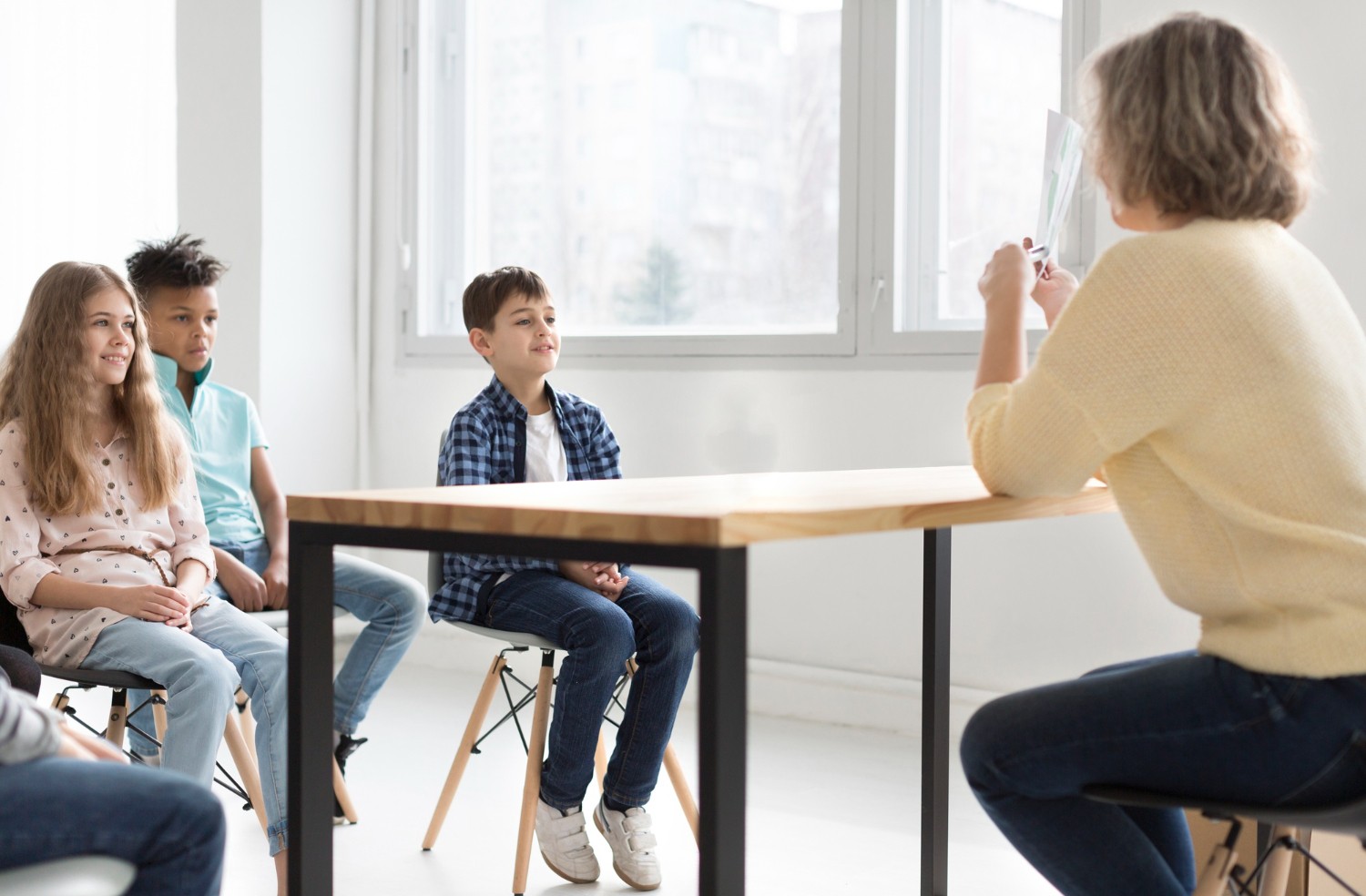
Mental Health in Schools: Supporting Students’ Well-Being
How School Affects a Child’s Mental Health
School is the official institution responsible for education, as well as transferring developed culture and providing suitable conditions for physical, mental, emotional, and social growth. When a child begins their education at school, they have already gone through a considerable part of social upbringing within the family. The child enters school equipped with many pieces of information, social standards, values, and attitudes. School expands this circle of information, standards, values, and attitudes in an organized way. At school, the student interacts with teachers and classmates, is influenced by the curriculum in its broad meaning of knowledge and culture, and their personality develops in all aspects.
The School’s Responsibilities in Supporting a Child’s Mental Health Development
| Responsibility | Its Role in Supporting the Child’s Mental Health |
| Providing psychological care | Providing psychological care to every child, helping them solve their problems, and guiding them from being dependent on others to becoming an independent adult who relies on themselves and is psychologically well-adjusted. |
| Achieving goals in a suitable way | Teaching the child how to achieve their goals in an appropriate way that aligns with social standards, which supports their social adjustment. |
| Psychological guidance and counseling | Paying attention to psychological guidance and counseling for the student. |
| Social upbringing | Focusing on the process of social upbringing in cooperation with other social institutions, especially the family. |
| Ensuring healthy psychological growth | Taking into account everything that helps ensure the child’s healthy psychological development. |
Psychological Methods Used at School
The school uses many psychological methods while educating students, including supporting social values through the curriculum, directing school activities in a way that teaches desirable behavioral methods, social standards, social roles, values, reward and punishment, and the practice of school authority in the educational process. It also works on gradually helping the child become emotionally independent from the family and provides positive models of healthy behavior.
How Can a Child’s Mental Health Be Balanced Between Family and School?
- The relationship between teachers and students, when based on democracy, proper guidance, and sound counseling, leads to a better relationship between teachers and students, as well as healthy educational and psychological development.
- The relationships between students, when based on cooperation and mutual understanding, support healthy mental well-being in dealing with others.
- The relationship between school and family, which should involve continuous communication between parents and teachers or through parent-teacher councils at school, plays an important role in creating integration between the family and school in supporting students’ psychological development.
The fields of applying mental health at school are numerous, including its philosophy, administration, curricula, teachers, care for students, and the relationship between school and family. Progressive schools and progressive education are the opposite of traditional schools and traditional education. The mission of a progressive school is education in its broad meaning. Education is a life process through which the child learns the meaning of life through positive activities guided by the educator. The function of the progressive school and the goal of progressive education is to shape, develop, and guide the student’s personality in all aspects: physically, mentally, emotionally, and socially, in a balanced way.
Academic achievement and acquiring knowledge and information should not be the sole focus of the school. Attention should also be given to the student’s personal and social adjustment, healthy mental well-being, the formation of sound behavioral habits, and positive attitudes toward school, work, and people in general, so the child grows into a good person. When developing curricula, students’ and educators’ mental health should also be taken into account. Curricula should also be natural and help students adapt to life situations. Attention should also be paid to the suitability of the social environment inside and outside the classroom, as well as in curricular and extracurricular activities. In short, all psychological characteristics of the student should be considered according to the developmental stage they are going through.
The Teacher’s Role in the Educational Process
- The teacher plays an important role in the educational process, in supporting psychological development, and in achieving the student’s mental health. The teacher continues to influence the student from the moment they enter school until graduation. The teacher is a living behavioral model whom the student looks up to, identifies with, and imitates. The teacher also provides knowledge and information to students and guides behavior by correcting the student’s behavior for the better through healthy behavioral experiences.
- The teacher is not only a transmitter of information and knowledge, but also a teacher of psychological adjustment skills, a person who identifies signs and symptoms of behavioral disorders, and someone who helps correct and manage such disorders.
- Educators, including teachers and parents themselves, should enjoy good mental health, because a person cannot give what they do not have. This requires achieving psychological security, emotional stability, adjustment with students, democracy in dealing with them, and having a positive and balanced view of life.
- Teachers’ problems and signs of poor personal and social adjustment should be addressed. These problems may be related to economic conditions, social status, fatigue, exhaustion, lack of resources, and limited cooperation from parents.
- Students’ mental health is affected by the educator’s personality. The educator should be a good role model for students through their behavior. An educator who says what they do not do should understand that the best lesson they can teach children is: “Do as I do,” not “Do as I say.”
- It should be taken into account that the healthier the relationship between educators and children, among children themselves, and between school and family, the more this supports their psychological adjustment and sense of security, which leads to success and achievement. Therefore, positive attitudes should be developed among educators through guidance and counseling for educators and through parent-teacher councils.
- The teacher should act as an educator who teaches, guides, and sometimes helps treat problems. The teacher should teach knowledge, guide development, deal with the problems they can handle, and refer the problems they cannot treat to specialists in the school’s psychological clinics.
The Concept of the Teacher
This is one of the most important concepts that should be taken into account when preparing teachers in our country, as long as a sufficient number of psychotherapists is not yet available in schools and universities.
Some Notes
In light of the above, we find that education shares many of its goals with mental health, even if some of the methods used to achieve these goals differ. Although education specialists and mental health specialists differ in their academic specializations, they serve a shared practical field: children, youth, and adults. They also work toward a common goal, which is building an integrated personality for a person who is fit for life in a way that allows them to feel happiness, health, and psychological, moral, and social adjustment.
One of the most important goals of mental health is building an integrated personality for the child. This development must be sound in all aspects of the child’s life so they can grow into a well-rounded personality. The child must also be prepared properly from psychological, social, and moral perspectives. The educator, whether a teacher or parent, should be a well-adjusted person so that dealing with the child takes place within an ethical framework.
Start Now
Develop your knowledge of mental health and methods for supporting children through IGTS accredited training programs.
Updated at: 2026-10-10 17:56:14