Tags
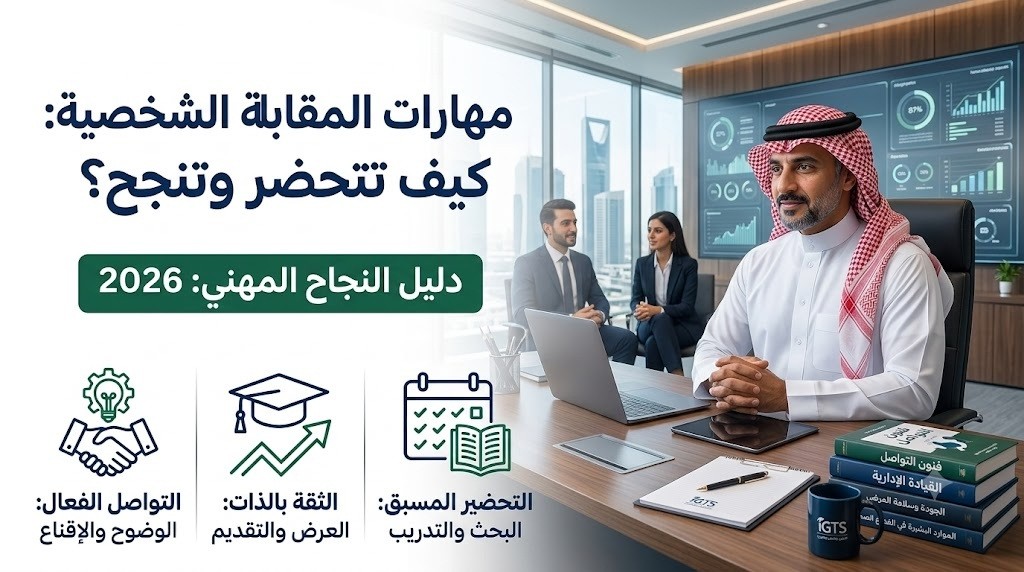
Interview Skills: How to Prepare and Succeed?
You may have the academic qualifications and experience required for the job, but that does not guarantee getting it if you cannot present yourself properly during the job interview. An interview is not only a test of knowledge; it is an opportunity to show your personality, way of thinking, communication ability, and how well you fit the work environment.
That is why many job seekers feel anxious before interviews, especially when facing unexpected interview questions or when they are unsure how to answer personal and professional questions.
The good news is that success in an interview is not an innate talent. It is a skill that can be acquired through training and good preparation.
In this guide, you will learn how to prepare for a job interview, the most common questions you may face, the best ways to answer them, and practical tips that help you leave a professional impression in the Saudi work environment.
Preparing Before the Interview
Good preparation is the factor that gives you confidence during a job interview. The more prepared you are, the easier it becomes to handle different questions and situations.
Learn About the Company
One of the most common mistakes is entering an interview without sufficient knowledge about the company.
Before the interview date, try to learn about:
- The nature of the company’s business.
- Its products or services.
- Its values and mission.
- The latest news or projects it has announced.
- The requirements of the job you applied for.
This information helps you connect your answers to the employer’s needs and shows your genuine interest in the position.
Review the Job Description
Read the job posting again and identify the required skills and experience, then prepare examples from your experience or studies that show you have these skills.
Instead of saying, “I am good at working in a team,” talk about a real situation where you worked with a team and achieved a tangible result.
Prepare Your CV
The recruiter may ask you about any information included in your CV, so you should be ready to talk about every point you added.
If you have not prepared your CV yet or want to improve it, you can also read the article on how to write a professional CV to learn about the most important elements recruiters look for.
Prepare Your Self-Introduction Answer
The interview often starts with a simple question such as:
“Tell us about yourself.”
Although it seems simple, it is one of the questions that causes the most stress.
Make sure your answer is brief and organized, and includes:
- A brief overview of your qualification.
- Your most important experience or projects.
- Your key skills.
- The reason you are interested in this job.
Practical Example
“I am an Information Technology graduate, and over the past years I have focused on developing my skills in data analysis and working on several university and training projects. I am now looking for an opportunity where I can apply what I have learned and contribute to achieving the team’s goals, while continuing to develop my experience.”
Pay Attention to Small Details
One day before the interview:
- Confirm the interview time.
- Know the company location or the online meeting link.
- Prepare suitable clothing.
- Get enough sleep.
- Make sure to arrive 10 to 15 minutes early.
These details reduce stress and give you a calmer start.
Read Also
The Most Common Interview Questions and How to Answer Them
There is no fixed list that includes all job interview questions, but there are a number of questions that are repeated in most interviews.
Preparing for them in advance helps you give clear and natural answers.
1. Tell Us About Yourself
Do not turn the answer into a full story of your life.
Focus on what is related to the job. Start with your current situation, then move to your experience, and end with what you aspire to achieve.
2. Why Do You Want to Work With Us?
The recruiter wants to know how interested you are in the company, not just whether you are looking for any job.
Example Answer
“I was impressed by the nature of the projects you work on, and I believe this position matches my experience. It also gives me an opportunity to grow and contribute to achieving the team’s goals.”
3. What Are Your Strengths?
Choose one or two strengths that are directly related to the job, and support each one with a real example.
Example
“One of my strengths is time management. In my previous role, I was responsible for following up on several tasks at the same time, and I was able to deliver all of them within the required deadlines.”
4. What Are Your Weaknesses?
This question is not meant to embarrass you, but to understand how self-aware you are.
Choose a real weakness, then explain how you are working on improving it.
Example
“I used to find it difficult to delegate some tasks, but I started using work organization tools and distributing responsibilities, and I noticed a significant improvement in my performance.”
Avoid answers that suggest a lack of seriousness, such as:
- I do not have any weaknesses.
- I am perfect at work.
- I work too much.
5. Why Did You Leave Your Previous Job?
Even if your previous experience was not good, avoid criticizing your former employer.
Focus on your desire to grow, gain new experience, or look for bigger challenges.
6. Where Do You See Yourself in Five Years?
The recruiter is not looking for an exact answer. They want to understand your ambition and career stability.
Talk about your desire to develop your skills, take on greater responsibilities, and contribute to the company’s success.
Practical Exercise
Write your answers to the six questions above, then practice presenting them out loud without memorizing them word for word.
The goal is to sound natural and confident, not to recite a memorized script.
Body Language in the Interview
A job interview does not depend on answers alone. Recruiters also pay attention to the way you present yourself. Body language may reflect confidence and calmness, or on the contrary, it may suggest hesitation even if your answers are good.
That is why paying attention to non-verbal signals gives you a better chance to leave a professional impression from the first moments.
If you want to develop this skill more deeply, you can also read the article on body language to learn about the most important positive signals and how to use them in the workplace.
When Entering the Interview
First impressions are formed within seconds, so make sure to:
- Enter calmly and confidently.
- Smile naturally.
- Greet others professionally.
- Shake hands if the situation is appropriate.
- Sit down after you are invited to do so.
During the Conversation
Try to make your body language support what you are saying.
Best practices include:
- Maintain an upright and comfortable sitting posture.
- Look at the person speaking to you without exaggeration.
- Use your hands naturally to clarify ideas.
- Listen attentively and do not interrupt the interviewer.
- Show interest through appropriate facial expressions.
If you feel nervous, take a calm breath before answering, and do not rush your speech.
Common Mistakes to Avoid in an Interview
You may be qualified for the job, but some simple mistakes can affect your evaluation.
Lack of Preparation
Relying on improvisation is one of the most common reasons for weak performance in a job interview.
Set aside time to practice answering questions and review company information before the interview.
Talking Too Much or Too Briefly
A long answer may distract the recruiter, while an answer that is too short may suggest a lack of interest.
Make sure to give a clear and direct answer, then support it with a practical example when needed.
Criticizing a Previous Employer
Even if you had a negative experience, avoid talking about it in an unprofessional way.
Instead, focus on what you learned and what you are looking for in your next opportunity.
Not Asking Any Questions
At the end of the interview, you will often be asked:
“Do you have any questions?”
Answering “no” may suggest a lack of interest.
You can ask questions such as:
- What does a typical workday look like in this position?
- What are the most important skills you expect from the person who will fill this role?
- How is performance evaluated during the first few months?
Neglecting Follow-Up After the Interview
If the company culture allows it, sending a short thank-you message after the interview reflects professionalism and interest, and leaves a positive impression on the recruiter.
Practical Exercise
Before any upcoming interview, follow these steps:
- Record your answers on video.
- Observe your tone of voice and speaking speed.
- Measure how much time each answer takes.
- Ask someone you trust to give you feedback.
- Repeat the practice until your answers become natural and not memorized.
This simple exercise helps reduce stress and increase self-confidence.
Because success in a job interview also depends on your ability to communicate clearly and build a good relationship with the other person, you can read the article on communication skills to develop your listening, persuasion, and interaction skills within the workplace.
Frequently Asked Questions
How Do I Prepare for a Job Interview?
Start by reading the job description, researching information about the company, reviewing your CV, then practice answering common questions and prepare examples from your experience that demonstrate your skills and achievements.
What Are the Most Difficult Interview Questions?
Questions vary from one job to another, but some of the most challenging include: Tell us about yourself, why should we choose you, what is your greatest achievement, and how do you handle work pressure? Preparing in advance helps you answer them with confidence and clarity.
How Do I Answer the Question About My Weaknesses?
Choose a real weakness that does not directly affect the requirements of the job, then explain the steps you are taking to improve it. This reflects self-awareness and a desire for continuous learning.
What Should I Say at the End of the Interview?
Thank the recruiter for their time, confirm your interest in the position, then ask about the next steps in the hiring process or the expected date for receiving the result.
What Should I Do After the Interview?
Review your performance and identify what can be improved in future interviews. If possible, send a short thank-you message expressing your appreciation for the interview and your interest in joining the company.
Success in an Interview Begins Before Its Date
Every job interview gives you an opportunity to show the skills and experience you have, but real success begins with good preparation and continuous practice. Over time, you will become more capable of handling questions, managing stress, and leaving a professional impression on recruiters.
Develop your professional skills and enroll in the accredited IGTS Diploma. Invest in the skills that help you build a more successful and confident professional future.
Start Now
Prepare for job interviews and develop the professional skills needed to make a confident impression.
Updated at: 2026-09-15 01:44:19