
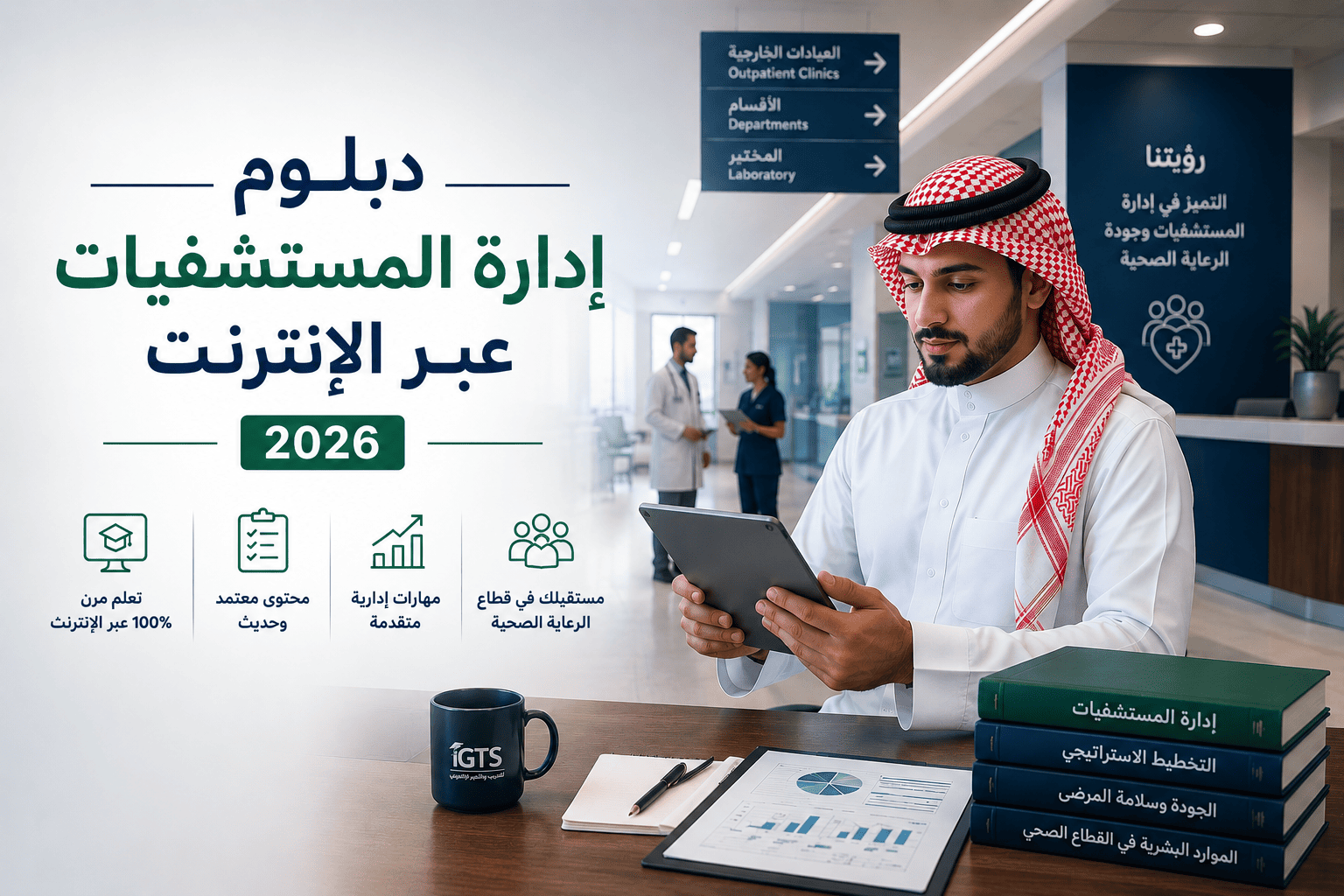
Online Hospital Management Diploma 2026
The healthcare sector in Saudi Arabia is witnessing rapid development, not only in medical services, but also in management, operations, and digital transformation. With the expansion of hospitals and medical centers, and the rising demand for administrative competencies, medical experience alone is no longer enough to move into leadership or administrative positions.
For this reason, many nurses, healthcare specialists, and administrators working in the healthcare sector are turning to a Hospital Management Diploma, because it gives them a broader understanding of managing healthcare facilities and helps them develop their career path without needing to leave their jobs.
With the spread of distance diplomas, it has become possible to gain these skills with greater flexibility, while organizing study time in a way that suits the nature of work and shifts.
If you are thinking about developing your professional future within the healthcare sector, this guide will introduce you to the importance of a Hospital Management Diploma, what you will study, job opportunities after completing it, and how to choose the right program.
Why a Hospital Management Diploma?
Modern hospitals depend on complex operating systems that include Human Resources, quality, risk management, patient safety, budgets, beneficiary services, and health technologies. Therefore, they need professionals who have administrative knowledge alongside an understanding of the nature of work inside healthcare facilities.
This is where the importance of a Hospital Management Diploma comes in. It helps workers in the healthcare sector move from focusing only on the operational side to understanding the full picture of managing a healthcare institution.
Who Is This Diploma Suitable For?
It is suitable for several groups, including:
- Nurses who want to develop their administrative career path.
- Laboratory and radiology specialists.
- Workers in medical records.
- Reception and patient service staff.
- Administrators in hospitals and medical centers.
- Graduates of healthcare specializations who want to expand their career opportunities.
It can also be a suitable step for those planning to take on supervisory or administrative responsibilities in the future.
Why Is Demand for This Specialization Increasing in Saudi Arabia?
The Saudi healthcare sector is witnessing continuous expansion within the framework of Saudi Vision 2030, with investment in new hospitals, health insurance, digital transformation, and improving service quality.
This expansion is accompanied by a growing need for professionals with skills in:
- Managing healthcare operations.
- Coordinating services.
- Quality management.
- Improving patient experience.
- Monitoring performance indicators.
- Managing resources within healthcare facilities.
For this reason, combining healthcare experience with administrative knowledge has become a competitive advantage in the job market.
Why Do Many People Prefer Studying Online?
Healthcare workers often deal with shifts and changing working hours, which makes committing to in-person study difficult.
For this reason, a distance diploma provides practical advantages, including:
- Studying from anywhere.
- Flexibility in organizing learning time.
- The ability to balance work and study.
- Reducing the time spent commuting.
- Accessing content at suitable times.
This flexibility makes continuing professional development more realistic for full-time workers.
What Will You Learn in the Diploma?
A Hospital Management Diploma aims to build integrated knowledge of managing healthcare facilities, not only focusing on the medical side.
Although program content differs from one training provider to another, most programs cover a set of essential topics.
Hospital and Healthcare Facility Management
You learn about the administrative structure of the hospital, mechanisms for distributing responsibilities, managing different departments, and the relationship between medical and administrative departments.
Quality Management in the Healthcare Sector
You learn the principles of quality, methods of performance monitoring, and how to develop healthcare services in a way that achieves beneficiary satisfaction and improves work efficiency.
Human Resources Management
This includes topics such as:
- Workforce planning.
- Task distribution.
- Performance evaluation.
- Competency development.
- Teamwork inside healthcare institutions.
Risk Management and Patient Safety
Patient safety is one of the most important pillars of modern healthcare management.
For this reason, the diploma covers topics such as:
- Risk identification.
- Incident reporting.
- Preventive procedures.
- Continuous improvement.
- Strengthening the safety culture inside the facility.
Beneficiary Services
Service quality is no longer measured by medical efficiency only. Patient experience has become an important part of evaluating healthcare facilities.
Therefore, training programs cover topics such as:
- Communicating with patients.
- Complaint management.
- Improving beneficiary experience.
- Measuring customer satisfaction.
Fundamentals of Financial Management
The diploma does not aim to prepare an accountant, but it gives trainees a general understanding of the basics of:
- Budget preparation.
- Cost monitoring.
- Expenditure rationalization.
- Supporting financial decision-making.
Digital Transformation in Hospitals
The healthcare sector is witnessing a major shift toward electronic systems, so many programs include topics such as:
- Health information systems.
- Electronic medical records.
- Digital performance indicators.
- Data management.
- Modern technologies in healthcare management.
IGTS Diploma in Hospital Management
When choosing a training program, it is not only about the diploma name. You should also look at the quality of the content, how closely it is connected to job market needs, the flexibility of study, and the support trainees receive throughout their learning journey.
The Hospital Management Diploma from IGTS offers an online learning experience suitable for healthcare workers, with content focused on the practical aspects trainees need in the workplace, from healthcare management fundamentals to quality, operations management, and institutional performance improvement.
Distance learning also provides flexibility that helps employees develop their skills without needing to stop working or commit to attendance at fixed times, making the program suitable for those seeking career advancement while maintaining their job responsibilities.
Job Opportunities After the Diploma
Obtaining a Hospital Management Diploma does not mean changing your healthcare specialization. Instead, it gives you administrative skills that expand your career options within the healthcare sector and qualify you to participate in operations management and service quality improvement.
Available opportunities differ depending on your basic qualification, practical experience, and the nature of the organization you work for, but the diploma adds real value for those who want to move into supervisory or administrative roles.
Key Jobs You Can Apply For
Some of the roles that a Hospital Management Diploma holder may benefit from include:
- Healthcare Services Supervisor.
- Hospital Operations Coordinator.
- Quality Officer in healthcare facilities.
- Patient Experience Officer.
- Patient Safety Coordinator.
- Medical Records Officer.
- Reception and Beneficiary Services Supervisor.
- Outpatient Clinics Coordinator.
- Operations Officer in medical centers.
- Assistant Department Manager in a healthcare facility.
Not all of these jobs are necessarily available immediately after the diploma, as some also depend on years of experience and the nature of the basic qualification.
How Does the Diploma Increase Your Career Opportunities?
Employers today look for people who combine specialized knowledge with the ability to manage.
For example, a nurse may have excellent clinical experience, but when applying for a supervisory role, they need additional skills such as:
- Managing work teams.
- Organizing operations.
- Monitoring performance indicators.
- Preparing reports.
- Problem-solving.
- Time management.
- Communicating with different departments.
This is where the Hospital Management Diploma helps bridge the gap and prepares trainees for greater responsibilities inside the healthcare institution.
What About Distance Learning?
Distance diploma programs have become a popular option among healthcare workers because they give them the opportunity to develop their skills without affecting their job commitments.
When choosing a program, make sure to review:
- Diploma content.
- Experience of the training provider.
- Study and assessment mechanism.
- Services provided to trainees.
- How closely the content relates to job market needs.
If you would like to learn about the advantages of this type of program and how to choose the right one, you can also read the Distance Diploma article.
What About “Hadaf” Support?
Many trainees are interested in knowing whether training programs are included in the support programs of the Human Resources Development Fund, known as Hadaf.
It should be noted that support eligibility does not depend on the program name only. It is affected by several factors, including:
- Type of program.
- The provider offering it.
- The conditions announced at the time of registration.
- The applicant’s status and whether they meet the eligibility criteria.
Therefore, it is always recommended to review the latest announced support conditions before registering and confirm the details of the selected program directly with the training provider.
Frequently Asked Questions
What Is the Duration of the Hospital Management Diploma?
The duration of a Hospital Management Diploma differs depending on the training provider, the nature of the study plan, and the number of training hours. Therefore, it is preferable to review the details of the program you intend to join to know the study duration and learning method.
Is the Diploma Recognized in Saudi Arabia?
This depends on the provider offering the program and the type of accreditation the diploma receives. Therefore, it is important to verify the program details, the announced accreditations, and how well they align with your career goals before registering.
Is the Diploma Supported by Hadaf?
Some programs may be eligible for support programs according to the applicable rules and conditions at the time of application. However, this differs depending on the program and the applicant. Therefore, it is recommended to check the latest information with the training provider and review the announced support conditions before registration.
How Do I Register for the IGTS Diploma?
You can start by reviewing the details of the Hospital Management Diploma at IGTS, checking the program content, registration requirements, and study method, then completing the registration steps according to the instructions announced on the platform.
What Are the Job Opportunities After the Diploma?
A Hospital Management Diploma helps develop the career path of healthcare workers and may open opportunities in supervision, operations management, quality, beneficiary services, medical records management, and administrative coordination inside hospitals and healthcare centers, while keeping in mind that the nature of opportunities also depends on the basic qualification and practical experience.
Invest in Your Healthcare Experience and Develop Your Administrative Skills
The healthcare sector in the Kingdom is witnessing continuous development, and with it comes an increasing need for professionals who understand management alongside their specialized experience. Therefore, a Hospital Management Diploma can be a practical step for anyone who wants to expand their career options and prepare for supervisory and administrative roles inside healthcare facilities.
Choosing a flexible online study program also helps you continue learning without giving up your job responsibilities, allowing you to invest your time in developing skills needed by the job market today and in the future.
Register for the IGTS Hospital Management Diploma
If you are looking for a program that combines flexibility with practical content, the Hospital Management Diploma from IGTS provides an online learning experience suitable for healthcare workers, with topics focused on healthcare management, quality, operations, and performance development.
If your current path is in the healthcare field, you may also benefit from reading the Nursing Specialization article to learn about professional development opportunities in this specialization, in addition to the Distance Diploma article to understand the advantages of e-learning and how to choose the right program.
Start Now
Develop your healthcare management skills and prepare for supervisory and administrative roles in hospitals and healthcare institutions with IGTS.
Updated at: 2026-10-10 15:54:15