
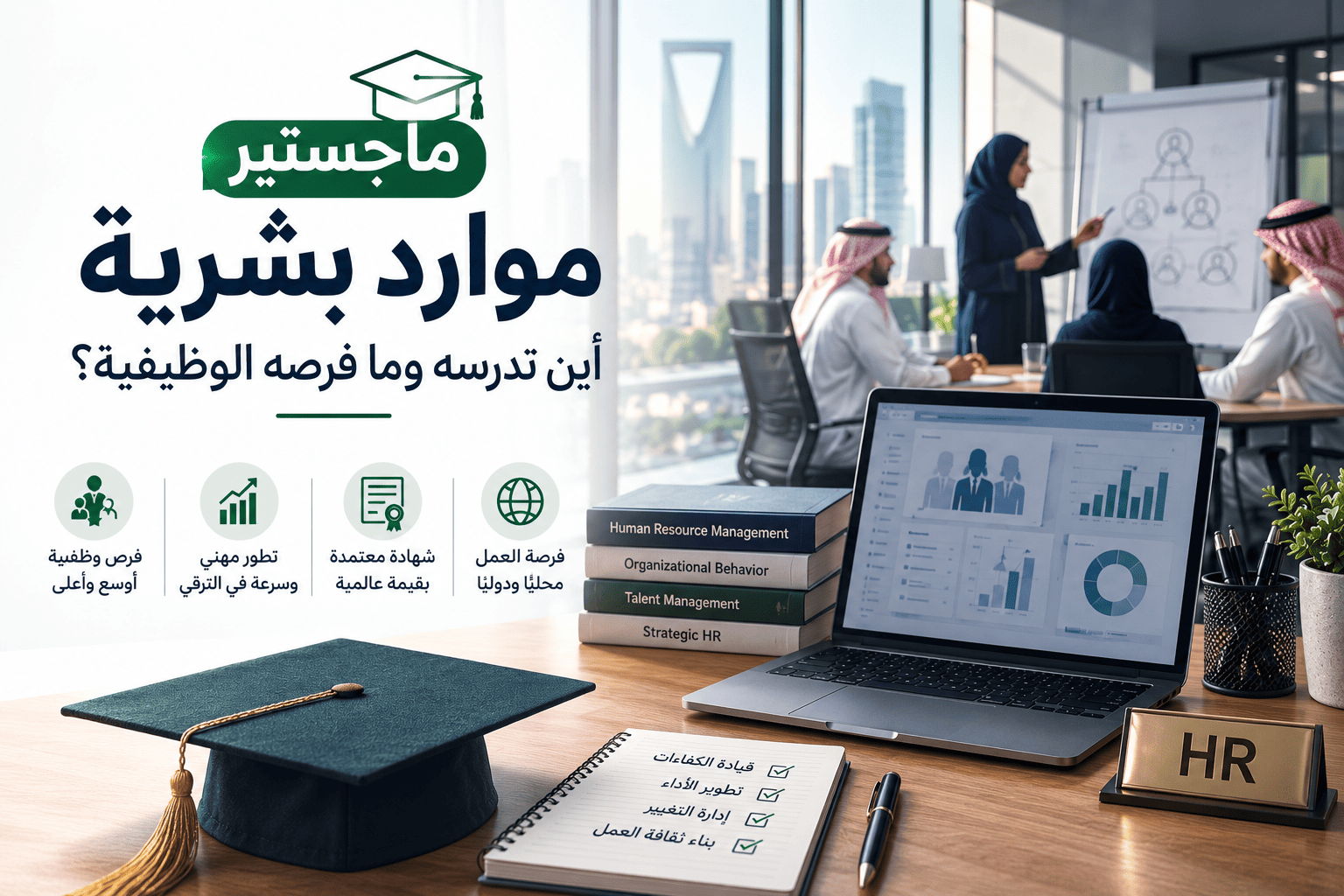
Master’s in Human Resources: Where to Study and What Are the Career Opportunities?
If you already work in human resources or are considering a career transition into the field, pursuing a Master’s in Human Resources can be a valuable way to deepen your knowledge and prepare for more advanced professional roles. However, a master’s degree is not the only option available, nor is it necessarily the right first step for everyone.
Before choosing a program, it is important to define your study goals, understand the difference between a master’s degree and an HR diploma, review the admission requirements, explore the study format and curriculum, and verify the type of qualification you will receive.
This is particularly important if you are a recent graduate or currently work in another field and are considering a career change into HR.
In this guide, you will learn what a Master’s in Human Resources involves, what you may study, how to choose the right program, which career paths may be associated with the degree, and when an HR diploma may be a more practical option.
What Is a Master’s in Human Resources?
A Master’s in Human Resources is a postgraduate degree focused on managing people and human capital within organizations. Programs may cover advanced topics such as talent management, workforce planning, performance management, organizational development, and strategic human resource management.
Course content, admission requirements, and program duration vary between universities and institutions. For this reason, it is important to review the official details of each program before applying.
Before choosing a program, consider the following factors.
Type of Qualification
Make sure you are applying for a postgraduate master’s degree rather than a short course or professional training program that uses a similar title.
Admission Requirements
Review the required undergraduate qualification, accepted academic backgrounds, GPA requirements, and any additional conditions set by the university or educational institution.
Program Curriculum
Look for courses that support the career path you want to develop, whether that is recruitment, talent management, learning and development, HR analytics, or strategic HR management.
Study Format
If you are currently employed, flexibility may be an important factor. Compare full-time, part-time, online, and blended options where available, and check attendance, examination, and assessment requirements.
Accreditation and Recognition
Verify which institution awards the degree and whether the qualification is officially accredited or recognized. Avoid relying solely on promotional descriptions without checking the relevant official information.
Career Objective
Ask yourself which role or professional level you want to reach. Not everyone needs a master’s degree to begin a career in human resources.
Read Also
Where Can You Study a Master’s in Human Resources?
Study options vary depending on the country, university, and education system. Students in countries such as Saudi Arabia or Egypt can compare available university programs based on admission requirements, study format, curriculum, tuition fees, degree type, and accreditation.
Rather than choosing a program simply because of the university name or because it includes the word “master’s,” start with your professional objective.
If you already work in HR and want to progress into a managerial or strategic position, look for programs that include advanced topics in management, business strategy, workforce planning, and analytics.
If you are a recent graduate, however, gaining a practical foundation in HR may sometimes be more useful before committing to postgraduate study.
It is also important to distinguish between academic degrees and professional training programs. A professional course or diploma may focus more heavily on practical workplace skills, while a master’s degree usually follows a broader and more academically advanced structure depending on the awarding institution.
What Do You Study in Human Resources?
The curriculum varies from one program to another, but studying human resource management may involve several areas that help you understand the employee lifecycle and the role of HR within an organization.
Common subjects may include:
- Human resource and workforce planning
- Recruitment, selection, and hiring
- Performance management
- Learning and development
- Talent management
- Compensation and benefits
- Employee relations
- Organizational development
- Leadership and team management
- HR Analytics
- Strategic human resource management
You do not necessarily need to specialize in all of these areas.
For example, someone interested in recruitment may need a different set of skills from someone planning to work in talent management or HR analytics. Your choice of courses and specialization should therefore reflect the type of role you want to pursue.
What Is the Difference Between a Master’s in Human Resources and an HR Diploma?
The main difference lies in the level and purpose of study.
A master’s degree is a postgraduate academic qualification, while a professional HR diploma typically focuses on building practical knowledge and skills in a specific field, depending on the institution and program.
| Comparison | Master’s in Human Resources | HR Diploma |
|---|---|---|
| Level | Postgraduate study | Professional qualification or development program, depending on the provider |
| Main objective | Advanced study of human resource management | Building foundational HR knowledge and professional skills |
| Study approach | Broader and more advanced | Usually more focused on practical skills and applications |
| Suitable for | Candidates who meet postgraduate admission requirements and have a clear academic or professional goal | Recent graduates, employees, and professionals considering a career change |
If you are at the beginning of your career, an HR diploma may provide a practical starting point for understanding the field and developing essential skills.
If you meet the postgraduate admission requirements and need a master’s degree for a specific academic or professional goal, then a master’s program may be the more appropriate route.
You can also explore the main Human Resources Diploma program page to learn more about the available training path and compare it with your current professional needs.
What Career Opportunities Are Available After a Master’s in Human Resources?
Studying human resources can support several career paths, but earning a master’s degree does not guarantee a specific job.
Employment opportunities depend on a combination of factors, including professional experience, practical skills, qualifications, the employer’s requirements, and your ability to apply what you have learned.
Possible HR career paths include:
- Human Resources Specialist
- Recruitment and Talent Acquisition Specialist
- Talent Management Specialist
- Learning and Development Specialist
- Employee Relations Specialist
- Compensation and Benefits Specialist
- HR Analytics Specialist
- Human Resources Manager
- Talent Manager
- Organizational Development Manager
As the role of HR continues to evolve within organizations, the profession is no longer limited to administrative procedures and employee documentation.
Skills such as data analysis, business understanding, performance measurement, workforce planning, and cross-functional communication are becoming increasingly important for career development in human resources.
If you already work in HR, identifying your next area of development can help you choose the right educational path.
For one professional, the priority may be developing strategic HR knowledge, while another may benefit more from improving recruitment, talent management, learning and development, or analytics skills.
Is a Master’s in HR Suitable for Recent Graduates?
A master’s degree does not necessarily have to be the first step for every recent graduate.
If you have recently graduated and are still exploring the HR field, it may be beneficial to first learn the fundamentals of human resource management and gain some practical understanding before committing to postgraduate education.
On the other hand, if you meet the admission requirements and have a clear reason for pursuing the degree, you can compare available master’s programs and make your decision based on your academic and career objectives.
The important thing is not to pursue a master’s degree simply for the sake of gaining a higher qualification.
Consider what value the degree will add to your career, what skills you will develop, and which roles or responsibilities you want it to prepare you for.
Can You Move into HR from Another Career Field?
Yes. Professional HR training can provide a useful foundation for people coming from different academic or professional backgrounds.
However, job requirements vary significantly between HR roles. If you are considering a career transition, start by learning the fundamentals of human resources and then identify the specialization that best complements your previous experience.
Combining your original area of expertise with HR knowledge can also help you build a distinctive career path, particularly when your previous experience is relevant to the HR specialization you choose.
Frequently Asked Questions About a Master’s in Human Resources
What Are the Requirements for a Master’s in Human Resources?
Admission requirements vary between universities and programs.
They may include an undergraduate degree, a particular academic background, a minimum GPA, language requirements, or other criteria determined by the institution.
You should therefore avoid treating the requirements of one university as a general rule and instead check the official admission criteria for the specific program you are considering.
Can You Study a Master’s in Human Resources Online?
It depends on the university and the program.
Some educational institutions offer online, blended, or flexible study options, while others require in-person attendance or have specific academic requirements.
Before enrolling, verify the study format as well as attendance, assessment, and examination requirements.
Do I Need a Bachelor’s Degree in Human Resources to Study a Master’s in HR?
Not necessarily, but this cannot be generalized across all programs.
Admission requirements vary by institution, and some universities may have specific requirements regarding your previous academic specialization.
Always review the requirements of the particular program before applying.
Is an HR Diploma Suitable for a Career Change?
An HR diploma can be a practical option for professionals who want to build a foundation in human resources before moving into the field, particularly those coming from another specialization or those who are still at the beginning of their careers.
The right program will depend on your existing experience, current skills, and the type of HR position you want to pursue.
Does a Master’s Degree Guarantee a Job in Human Resources?
No.
A master’s degree can strengthen your academic knowledge and qualifications, but it does not guarantee employment.
Professional experience, practical skills, job requirements, industry knowledge, and your ability to apply what you have learned all play an important role in your career opportunities.
Start with Your Professional Needs in Human Resources
Choosing between a Master’s in Human Resources , an HR diploma , or a specialized professional training program should begin with your career objective rather than the name of the qualification.
If you are aiming for an academic or professional path that requires postgraduate education, carefully compare the available master’s programs before making a decision.
If you are just beginning your HR career or planning to transition into the field, starting with a practical professional qualification may be more suitable at your current stage.
IGTS offers a range of Human Resources programs, including the Human Resources Diploma, as well as specialized training programs designed to help professionals develop their knowledge and practical skills in the field.
Take the Next Step in Your HR Career
If a professional diploma fits your current stage, review the IGTS HR Management Diploma, explore the HR specialization guide, or contact the team to discuss the path that best matches your goals.
Updated at: 2026-10-10 16:49:33