
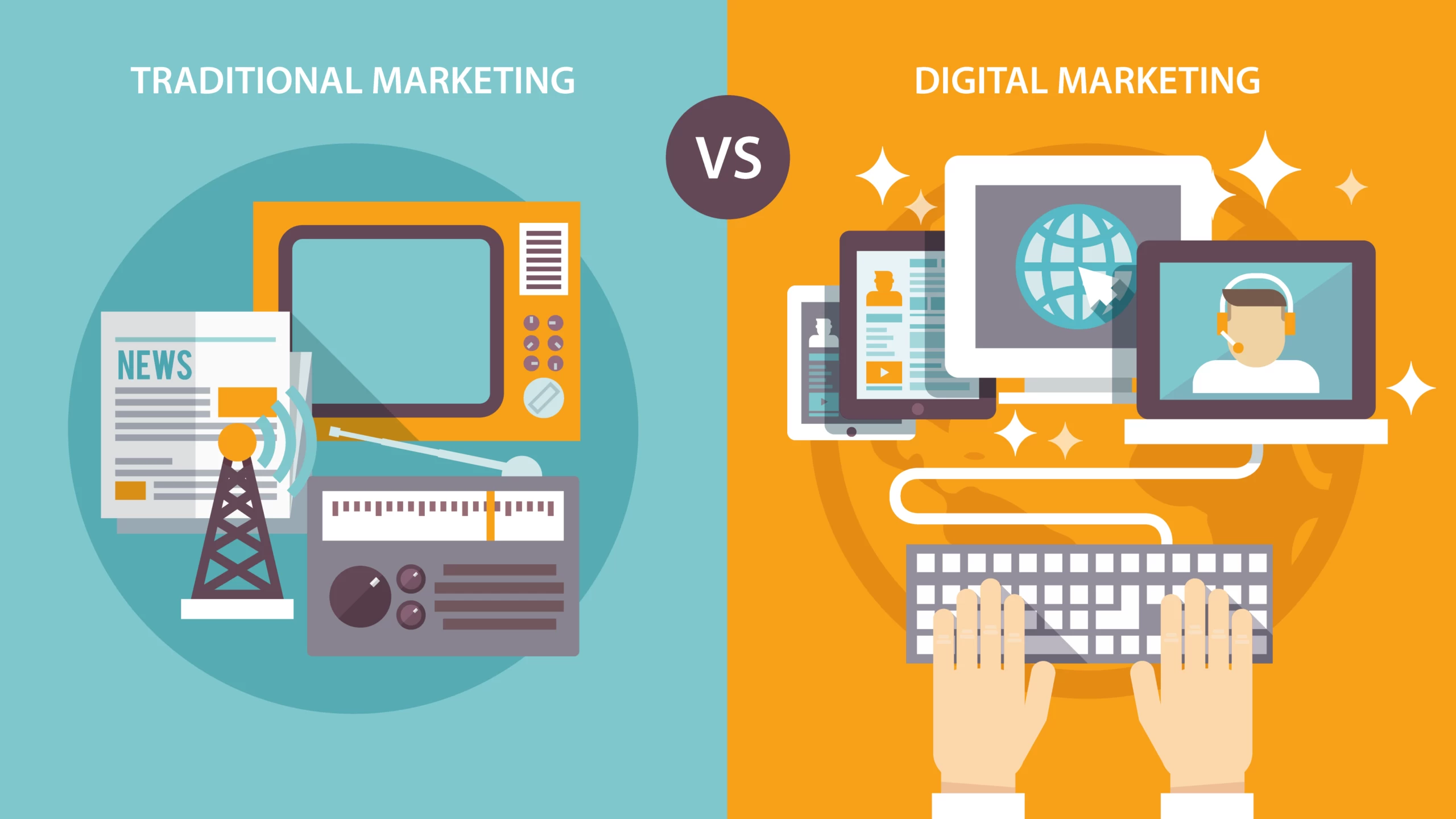
Digital vs. Traditional Marketing: Which is Best for You?
In an era of rapid digital transformation, understanding the difference between digital marketing and traditional marketing has become essential for entrepreneurs and business owners, whether they run a small, medium-sized, or large company. Choosing the right marketing strategy can play a central role in business growth, increasing sales, and strengthening brand identity in customers’ minds.
However, one important question continues to arise: Which is better, digital marketing or traditional marketing? The reality is that each approach has distinct advantages and strategic applications. The right choice depends on the nature of your business, the characteristics of your target audience, and the budget allocated to your campaigns.
In this comprehensive article, we will explore the concepts of digital and traditional marketing, their key tools, their advantages and disadvantages, and how the two approaches can be integrated to achieve the greatest possible impact.
What Is Traditional Marketing? (Concept and Tools)
Traditional marketing is the classic approach to promoting products and services through media channels that were widely used before the expansion of the internet. It primarily relies on reaching audiences through largely non-interactive channels with broad exposure.
Most Common Traditional Marketing Tools:
- Television and cinema advertising.
- Advertisements in newspapers and specialized magazines.
- Large outdoor billboards on major roads and highways.
- Radio advertising.
- Printed materials such as booklets, brochures, and flyers.
- Participation in trade fairs and major conferences.
Advantages and Disadvantages of Traditional Marketing:
| Advantages | Disadvantages |
|---|---|
| Can contribute to building brand trust and credibility. | Many traditional advertising campaigns involve relatively high costs. |
| Can reach audience segments that rely less heavily on the internet. | Accurately measuring results, such as actual exposure, can be more difficult. |
| Can create a strong visual or audio presence within specific geographic areas. | Offers less precise interest-based targeting than many digital channels. |
What Is Digital Marketing? (Concept and Tools)
Digital marketing is the use of the internet and digital technologies to promote products and communicate with customers. With the widespread use of smartphones, digital marketing has become one of the main methods businesses use to reach customers at relevant times and locations with a greater level of personalization.
Most Common Digital Marketing Tools:
- Social Media Marketing (SMM), including platforms such as Facebook, Instagram, TikTok, and LinkedIn.
- Search Engine Optimization (SEO) to improve visibility in Google search results.
- Paid advertising (PPC), such as Google Ads and social media advertising.
- Email Marketing.
- Content Marketing through articles, blogs, and videos.
- Influencer Marketing.
Advantages and Disadvantages of Digital Marketing:
| Advantages | Disadvantages |
|---|---|
| Flexible costs that can accommodate both small and large budgets. | Intense competition across digital channels. |
| Precise targeting based on factors such as age, interests, and location. | Rapid changes in platforms and algorithms. |
| The ability to measure and monitor metrics such as clicks, sales, and conversions. | Requires specialized knowledge and technical skills to manage campaigns effectively. |
Read Also
Comprehensive Comparison: The Key Differences Between the Two
To understand the difference between digital marketing and traditional marketing, it is useful to examine three main areas:
- Cost and Return on Investment (ROI): Digital marketing generally provides greater budget flexibility and allows businesses to track spending and performance in greater detail. Many traditional marketing channels require larger upfront budgets, while directly connecting spending to specific results may be more difficult.
- Reach and Targeting: Traditional marketing often focuses on reaching a broad audience through mass marketing, while digital marketing allows businesses to target more specific segments based on characteristics and interests.
- Interaction: Digital marketing supports two-way communication, allowing customers to respond, comment, engage, or make a purchase directly. Many traditional marketing channels primarily deliver messages in one direction.
Which Is Better for Your Business, and How Can You Combine Them?
There is no absolute answer that makes one approach better in every situation. Businesses may use billboards and other traditional channels to build brand awareness while also using digital advertising to support objectives such as engagement, reaching more specific audience segments, and generating conversion opportunities.
The best marketing strategy today is often a thoughtful combination of channels that match the nature of the business and its audience. Traditional marketing can be used to create broad awareness, while digital marketing and retargeting can help reconnect with interested audiences and support the conversion process.
Frequently Asked Questions (FAQ)
What Is the Main Difference in Measuring Results?
In digital marketing, businesses can monitor metrics such as how many people viewed, interacted with, or clicked on an advertisement using analytics platforms such as Google Analytics and other measurement tools. With many forms of traditional marketing, measurement relies more heavily on estimates and the audience data available for each medium.
Is Traditional Marketing Disappearing?
No. Instead, many traditional channels are evolving alongside technology. Billboards have become digital, and television has become increasingly connected to modern technologies. Traditional marketing can still support brand visibility and help businesses reach broad audience segments.
What Are the Main Digital and Traditional Marketing Tools?
Digital marketing tools include social media, Search Engine Optimization (SEO), paid advertising, email marketing, and content marketing. Traditional marketing tools include television, newspapers, radio, billboards, and printed marketing materials.
Conclusion
Understanding the difference between digital marketing and traditional marketing helps entrepreneurs and business owners choose a marketing strategy that better fits their objectives and supports business growth.
While digital marketing provides more precise targeting and greater flexibility in cost and measurement, traditional marketing remains a useful tool for building brand awareness and reaching broad audiences.
For many businesses, the most effective approach is to combine both methods within an integrated marketing plan designed to maximize overall impact.
Develop Your Marketing and Management Skills
If you want to gain a deeper understanding of modern marketing strategies and project management while developing your approach to managing a business, professional training can help you expand your knowledge and skills.
You can develop your understanding of marketing and management strategies by reviewing the Certified Business Administration Diploma and its training content before enrolling.
Start Now
If your goal is to strengthen your understanding of management, planning, and the role of marketing within a business environment, review the Certified Business Administration Diploma from IGTS and determine whether its content is relevant to your professional objectives.
Certified Business Administration Diploma Contact Us via WhatsAppUpdated at: 2026-10-10 13:04:58