
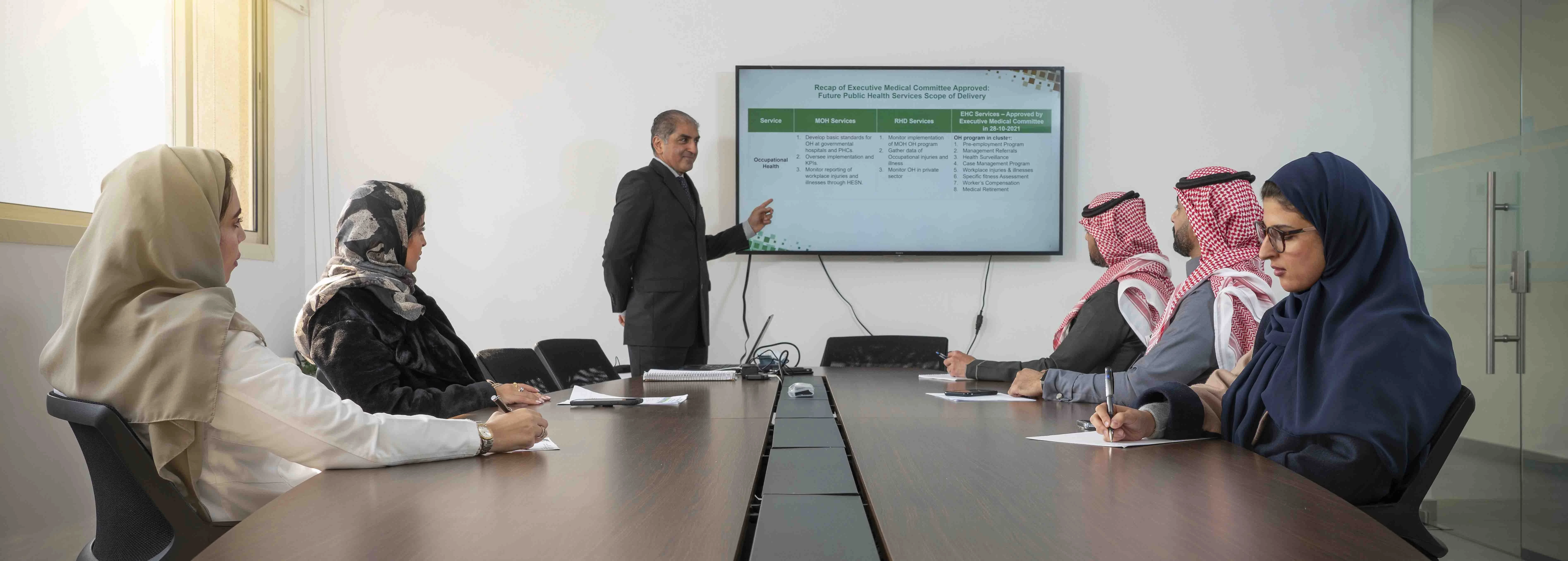
Training and Professional Development in the Healthcare Sector
With the development of technology and its integration into different aspects of healthcare, training and professional development have become essential within hospitals and healthcare centers to ensure safe and effective medical services, improve the patient experience, reduce errors, and enhance performance quality.
Healthcare training can be applied through workshops, seminars, training programs, lectures, and practical training within the work environment, helping employees continuously develop their abilities.
Healthcare Training and Developing the Skills of Healthcare Workers
Spreading awareness about patient safety and providing the best forms of healthcare are important steps toward achieving comprehensive care within healthcare institutions. This can be achieved through healthcare training and continuous professional development for workers in the medical sector.
Many countries work on establishing training centers and professional programs for employees in the healthcare sector, aiming to raise staff efficiency, develop their expertise, improve the quality of services provided to patients, and support healthcare management systems more effectively.
Learn With Us
Ways to Improve the Healthcare System Through Training
- Developing capacity-building programs for human resources in the medical sector to help them deliver better performance with high quality and efficiency.
- Contributing to building an integrated medical team capable of providing healthcare services safely and effectively.
- Preparing an annual training plan linked to the needs of employees within healthcare centers, with the goal of improving their professional level and work environment.
- Promoting a culture of patient safety and reducing the possibility of errors within healthcare institutions.
- Developing communication skills between the medical team and patients to improve the quality of service and care.
Healthcare Professional Development and Strategies for Enhancing Efficiency and Expertise
The importance of healthcare professional development appears in its ability to raise the efficiency of workers inside hospitals and treatment centers, ensuring better healthcare for all patients without discrimination.
When healthcare workers receive continuous training, their ability to handle different cases, use modern tools, and apply professional standards improves, which increases patients’ trust in the healthcare institution.
Reasons for Increasing the Efficiency of Healthcare Workers
- Providing the resources and tools needed by healthcare centers to train employees and improve their practical experience.
- Providing clear and reliable information about diseases that threaten the community and ways to prevent and manage them.
- Assigning employees to positions that suit their abilities and experience to achieve the required goals.
- Giving medical staff suitable flexibility at work to help them deliver their best performance.
- Using modern devices and technology in healthcare to speed up procedures, reduce errors, and improve service accuracy.
- Improving employees’ ability to manage patient files and digital systems more efficiently.
- Raising performance quality inside healthcare institutions through continuous experience and lifelong learning.
Continuing Medical Education and Its Role in Improving Healthcare Quality in Saudi Arabia
Saudi Arabia is working to develop its healthcare system and improve the quality of services provided to citizens and residents by relying on continuous training and raising the efficiency of workers in the healthcare sector.
Continuing medical education is one of the most important methods that help improve performance within healthcare institutions. It ensures that healthcare practitioners remain up to date with the latest scientific methods and modern technologies in diagnosis, treatment, and care.
Enroll With Us
The Importance of Continuing Medical Education in Healthcare
- Increasing the efficiency of medical staff through continuing medical education programs.
- Using modern scientific methods and developments that contribute to advancing the medical field.
- Enhancing the use of visual and audio learning tools to help practitioners acquire new clinical skills.
- Strengthening cooperation between different specialties to provide integrated medical services to patients and the community.
- Increasing educational seminars and lectures that raise the level of experience and knowledge among specialists.
- Improving patient outcomes by applying prevention strategies, early diagnosis, and effective treatment methods.
- Creating opportunities for creativity and innovation in healthcare by acquiring new skills such as critical thinking and problem-solving.
Conclusion
In conclusion, healthcare training and continuous professional development are among the most important factors that help improve the quality of healthcare within medical institutions. The higher the efficiency of workers, the better the institution’s ability to provide safer and more effective services.
Continuing medical education also plays an important role in developing the healthcare sector in Saudi Arabia by raising knowledge levels, supporting the skills of medical and administrative staff, and improving the quality of healthcare services provided to patients.
Start Now
Develop your knowledge of hospital management, healthcare training, and professional development through IGTS training programs.
Updated at: 2026-08-30 00:48:17