
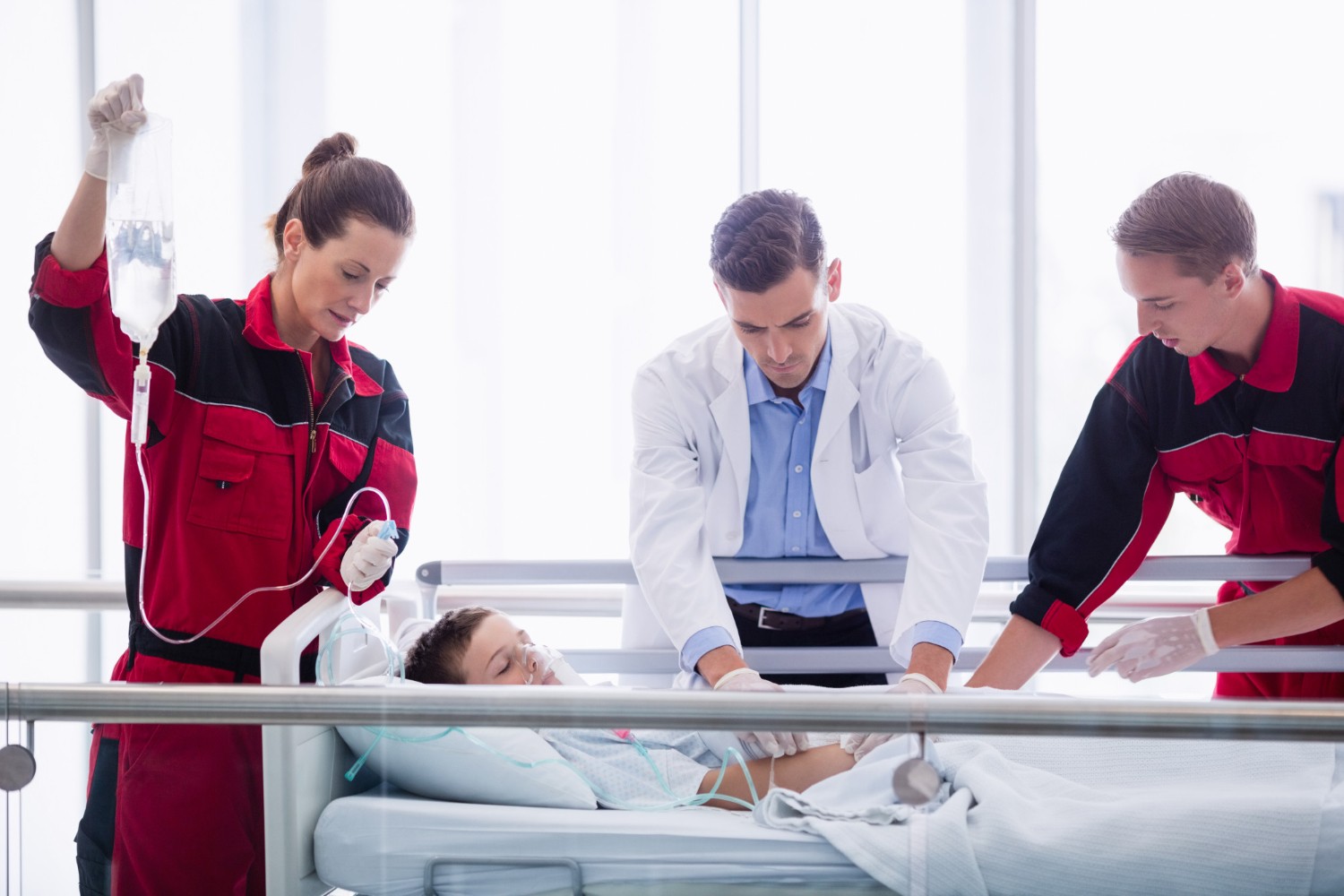
Pediatric Emergency & Critical Care Nursing: Roles and Challenges
Critical care and emergency nursing is a department dedicated to preparing nursing college students to deal with patients in critical conditions resulting from injuries, accidents, or sudden life-threatening illnesses. It trains them in rapid intervention and the management of critical cases. Students study various courses in their second year of college to prepare for this. In the following lines, we will explain the most important emergency cases that must be dealt with swiftly in the emergency department.
Pediatric Critical Care and Emergency Nursing
Critical care and emergency nursing is one of the most important nursing departments, directing all its care toward patients in unstable health conditions and providing intensive care. Nurses in this department perform numerous tasks that require mental presence and quick wit. They must also keep pace with all health technological developments that serve patients and provide them with top-tier healthcare. Furthermore, nurses in this department learn how to handle critical cases and interact with patients' families appropriately, taking into account their fragile psychological state.
Emergency Cases Managed During Emergencies and Natural Disasters
We will present the most important cases dealt with during emergencies, which include:
Internal Bleeding
If a patient presents with internal bleeding, the nurse is supposed to keep the patient lying flat, ensuring their feet are slightly elevated above the rest of their body. The nurse must refrain from giving the patient any oral fluids and must provide medical assistance that improves the patient's condition without causing harm or letting the situation deteriorate.
External Bleeding
When a case of external bleeding arrives, the type of bleeding (arterial or venous) must be identified. If it is arterial, the blood flows rapidly in pulsating spurts. If it flows smoothly and steadily, it indicates venous bleeding. In this case, strong pressure must be applied to the bleeding site, attempting to press on the closest point to the wound with fingers until the bleeding stops completely.
Cardiopulmonary Resuscitation (CPR)
This is one of the most vital nursing duties. Extremely rapid steps must be taken immediately if the heart or breathing stops to prevent any damage to vital organs or the brain. Rapid intervention in this situation helps save the patient's life swiftly.
Cardiac Emergencies
Cardiac arrests require immediate and rapid intervention by the nursing staff. This includes subjecting the patient to laboratory tests, recording health indicators, thoroughly examining the patient, and intubating if necessary. The nurse must also clarify all health information related to the patient and their medical history, identify all medications and dosages they are taking, and measure their blood pressure, blood sugar, and cholesterol levels.
Stroke
A stroke is a critical medical emergency requiring rapid medical intervention to avoid any damage to brain cells. The most prominent symptoms include weakness in the facial area, sudden numbness in the legs or an arm, speech disturbances, feeling off-balance, and vision impairment. If these symptoms appear, it is highly recommended to head to the hospital immediately to preserve the patient's health.
Mission of the Critical Care and Emergency Department
The department's mission is to provide integrated healthcare for all critical and emergency cases. It also aims to prepare nurses to handle pressure and adapt to the labor market's demands. Furthermore, it prepares students with a lifelong desire for continuous self-learning to provide community services in collaboration with public bodies and institutions.
Strategic Goals of the Department
Some of the goals that Pediatric Critical Care and Emergency Nursing seeks to achieve include:
- Providing a large number of nurses with professional and practical experience to offer the best health service to patients.
- Providing top-tier nursing services across all specialties and critical cases.
- Working to improve and enhance the health level of the community and individuals.
- Participating in developing curricula to match labor market demands and student needs.
- Preparing scientific research related to the nursing field.
- Utilizing the most advanced methods to complete all nursing tasks and skills for patients in the emergency department.
- Implementing and planning all nursing care schemes for patients across all types and locations of healthcare institutions.
The Role of the Emergency Nurse
- Providing intensive care to children in the emergency department.
- Offering complete medical care.
- Dealing with cases in the emergency department resulting from traffic accidents, heart attacks, or strokes.
Characteristics of an Emergency Nurse
An emergency nurse must possess certain characteristics, the most important being:
- The ability to interact well with patients of all ages, cultures, and religions.
- Possessing the practical experience required to handle the medical case in front of them.
- Reporting any abuse directed at them or any patient within the emergency department.
- Having a thorough background and knowledge of physiology, anatomy, psychology, and pharmacology.
- The ability to interact and communicate effectively with patients and their families.
Triage and Case Classification
The emergency nurse sorts and examines the case as soon as it arrives at the ER. They must be characterized by skill and speed in handling the situation, scrutinizing and classifying the patient's condition, and identifying life-threatening complications. They also perform procedures and administer medications to improve the patient's health based on the ER doctor's instructions.
Challenges in Emergency Nursing
Nurses face many challenges, including:
- Having many difficult tasks that they must adapt to rapidly.
- Proving themselves and exerting effort under severe psychological pressure.
- Interacting with patients in various ways and adapting to their reactions and behaviors.
- Collaborating with different teams within the healthcare system.
- Identifying the tasks and functions they must perform.
Pediatric critical care and emergency nursing treats over ten million children annually. This consumes a significant amount of the nurse's time and psychological energy, requiring their constant presence in this department for the sake of the patients' health.
Complications of Working in the ER
Some of the complications and negatives experienced by ER nurses include:
- Many nurses experience severe mental and physical exhaustion.
- Many nurses may face extreme pressure or assault from families while handling critical cases, as families might mistakenly believe they are neglecting their duties.
- They may also receive verbal or physical abuse from panicked visitors or patients.
Want to Master Nursing and Advance Your Career?
Join thousands of graduates at IGTS and acquire the medical and strategic skills that qualify you to work in top-tier hospitals and healthcare institutions.
Browse All Medical and Nursing Specialties Consult an Advisor on WhatsAppUpdated at: 2026-10-05 13:49:35