
Tags
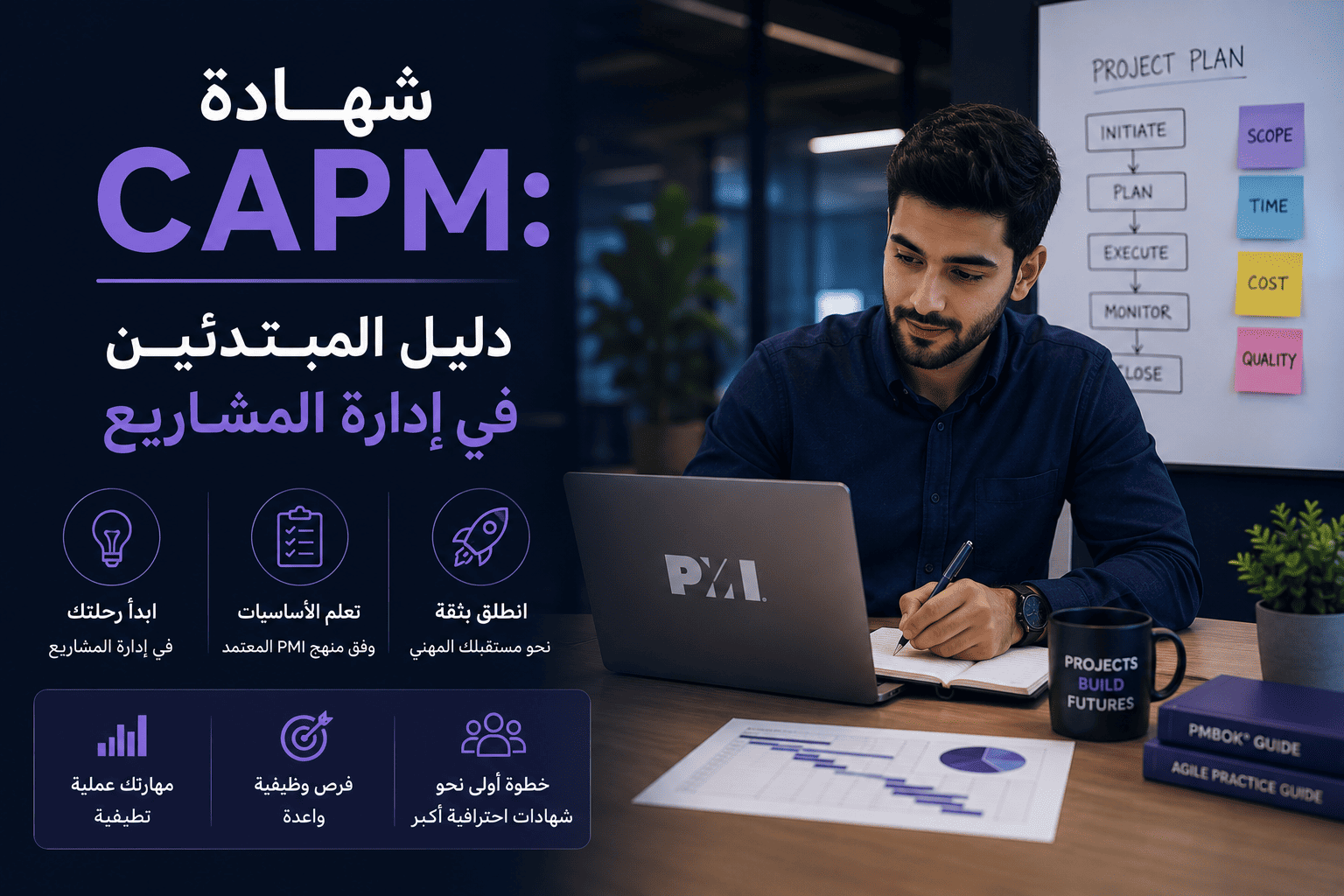
CAPM Certification: A Beginner’s Guide to Project Management
Many students and graduates think about entering the field of project management, but at the beginning, they often come across the PMP certification, which requires practical experience in project management. As a result, they may believe that they have to wait several years before obtaining any recognized professional certification.
In reality, there is an option designed specifically for those who are at the beginning of the journey: CAPM. This certification provides a strong foundation in project management concepts and helps you understand the methodologies and tools used in work environments, even if you have not managed a full project before.
With the expansion of infrastructure projects, digital transformation, and major investments in Saudi Arabia under Vision 2030, having professional knowledge of project management has become a competitive advantage across many sectors, such as technology, engineering, healthcare, financial services, and the government sector.
If you are looking for a clear starting point in this field, this guide explains what the CAPM certification is, the difference between CAPM and PMP, who it is suitable for, and how it can support your career path.
What Is the CAPM Certification?
CAPM stands for Certified Associate in Project Management. It is a professional certification issued by the Project Management Institute (PMI), the globally recognized organization known for developing project management standards and issuing some of the most well-known professional certifications in this field.
The CAPM certification aims to provide beginners with fundamental knowledge in project management and help them understand the terminology, methodologies, and best practices used in project planning, execution, and monitoring.
Unlike some advanced certifications, CAPM does not require many years of experience in project management. This makes it a suitable option for students, graduates, and employees who want to transition into this field.
What Will You Learn Through CAPM?
The certification focuses on the core concepts needed by anyone working in a project environment. These include topics such as:
- Project life cycle.
- Roles and responsibilities of the project team.
- Project planning.
- Scope management.
- Time and schedule management.
- Cost management.
- Quality management.
- Risk management.
- Communication with stakeholders.
- The basic principles of traditional and modern project management methodologies.
The goal is not only to memorize terminology, but also to understand how these concepts are applied in the workplace.
Who Is the CAPM Certification Suitable For?
CAPM is suitable for several groups, including:
- University students.
- Fresh graduates.
- People who want to change their career path to project management.
- Those who work within project teams without being project managers.
- Administrative coordinators.
- Engineers at the beginning of their careers.
- Professionals working in information technology or business who want to better understand project management.
It can also be a preparatory step for those planning to obtain the PMP certification in the future after gaining the required experience.
Why Has CAPM Become More Important?
Project management is no longer a skill needed only by project managers. Many organizations now look for employees who understand the basics of planning, time management, team coordination, and work execution follow-up.
The CAPM certification helps build this foundation, making its holder more prepared to work in project-based environments, even if they initially hold a non-managerial position.
The certification also provides an understanding of the shared language used by project management teams, which makes it easier to collaborate with managers and team members and work according to a clear methodology.
CAPM or PMP: Which One Is Right for You?
One of the most common questions among those interested in project management is the difference between CAPM and PMP.
Although both certifications are issued by PMI, each one targets a different group.
| Element | CAPM | PMP |
|---|---|---|
| Target Audience | Beginners, students, and graduates | Project managers and experienced professionals |
| Practical Experience | Does not require extensive project management experience | Requires documented project management experience according to PMI requirements |
| Objective | Building a strong foundation in project management | Proving the ability to lead and manage projects |
| Content Level | Foundational | Advanced |
| Suitable Stage | Beginning of the career path | After gaining suitable practical experience |
When Should You Choose CAPM?
CAPM is the right option if you:
- Are still in university or recently graduated.
- Want to enter the project management field for the first time.
- Do not meet the requirements to apply for PMP.
- Want to gain a scientific foundation before taking on project management responsibilities.
- Plan to build a long-term career path in this field.
In short, if PMP represents an advanced stage in the career path, CAPM represents the starting point.
Does Obtaining CAPM Replace PMP?
No. Each certification has a different purpose.
CAPM helps you gain foundational knowledge and understand project management methodologies, while PMP proves your ability to lead and manage projects based on previous practical experience.
That is why many professionals start with CAPM, then later move on to PMP after meeting the experience requirements. This makes the career development journey more organized and clearer.
You can also read the PMP Certification Article and explore the IGTS Professional Certificates and Diplomas to choose the training path that best supports your career goals.
Start Now
Start your project management journey and prepare for CAPM with training aligned with your career goals.
Updated at: 2026-10-10 15:23:19