
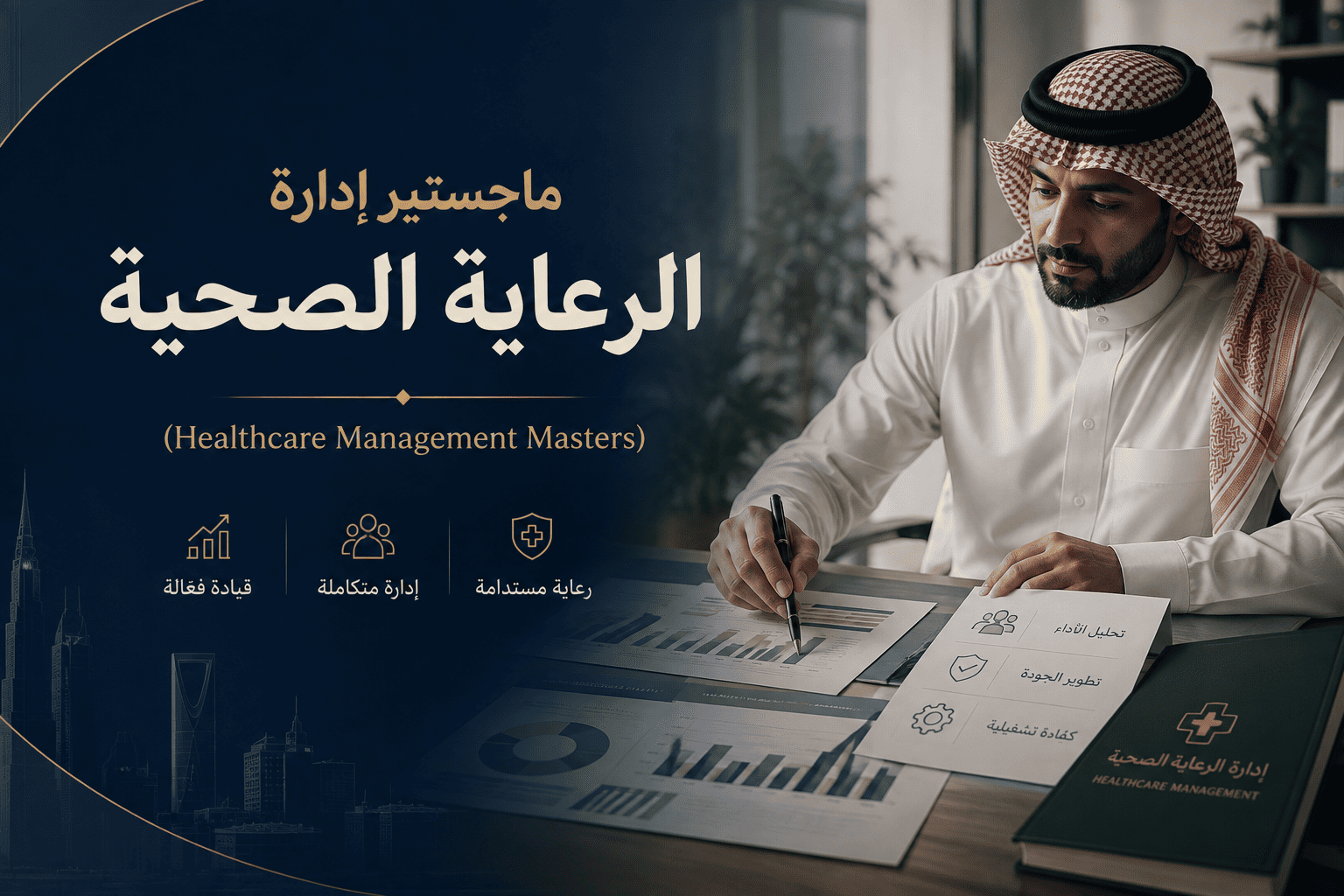
Master’s in Healthcare Management
If you work in the healthcare sector and are considering moving from a technical or clinical role into a management position, studying Healthcare Management may be a logical step for expanding your responsibilities. The idea is not to leave your healthcare experience behind, but to add an understanding of management, operations, resources, quality, and planning.
This is precisely what makes a Healthcare Management Master different from studying general management. You are not only learning management in theory, but applying management concepts to an environment with its own particular characteristics, such as hospitals, medical centers, and healthcare organizations.
Before enrolling, however, there is a more important question than “is the Master useful?” Are you actually ready to move from carrying out healthcare work to understanding how the system in which that work takes place is managed?
If the answer is yes, this page will help you understand the nature of the pathway, what you will study, when a Master may be suitable for you, how it differs from a diploma, and how it may support your professional development.
What Is Healthcare Management?
Healthcare Management is a field that combines management with an understanding of the healthcare environment and is concerned with managing healthcare organizations, services, and resources efficiently. It includes areas such as Strategic Management, Human Resources, Quality Management, Financial Resources, Operations, and Healthcare Services Marketing.
In simpler terms, the specialization does not focus on treating the patient. It focuses on managing the environment in which healthcare is delivered.
This includes hospitals, medical centers, clinics, and other organizations that need to manage people, resources, and operations while maintaining the quality of services.
Why Does the Healthcare Sector Need Management Professionals?
Managing a healthcare organization is not simply the same as managing any other company.
There is a difference between managing a sales team and managing a department within a hospital. In a healthcare organization, management decisions are directly connected to the patient experience, service quality, operations, and the use of resources.
A Healthcare Manager or management professional needs to understand several areas at the same time, including:
- How Human Resources are organized within the organization
- How budgets and financial resources are managed
- How daily operations are planned
- How service quality is monitored
- How the organization deals with problems and risks
- How different departments collaborate
- How healthcare services can be managed more efficiently
For this reason, moving into management does not depend only on having many years of healthcare experience. Experience is important, but understanding management itself becomes increasingly important as your responsibilities expand.
What Do You Study in a Healthcare Management Master?
If you expect the program to consist only of general management subjects, that is not the complete picture.
A strong Healthcare Management pathway connects management concepts with the challenges that appear inside healthcare organizations.
The IGTS Hospital Management Professional Master includes topics such as organizational environments and Human Resources in healthcare organizations, Health Education, Healthcare Quality Management, Occupational Health and Maintenance Operations Management, financial resources and accounting systems, and Healthcare Services Marketing.
This range of topics is important because Healthcare Management is not limited to one role within a hospital.
Strategic Management
This deals with the bigger picture.
Where does the organization want to go?
What are its objectives?
How can those objectives be converted into actionable plans?
Understanding these areas is important for someone who wants to move from carrying out tasks to participating in planning and decision-making.
Human Resources Management
Healthcare organizations depend on multidisciplinary teams, so managing people is an essential part of organizational success.
This includes understanding organizational structures, distribution of responsibilities, team management, recruitment, and other areas associated with Human Resources.
Healthcare Quality Management
Healthcare Quality is not simply an administrative procedure. It is connected to how services are delivered, how processes are improved, how errors are reduced, and how performance is improved.
This is why Quality Management appears among the fundamental subjects in Healthcare Management programs.
Financial Management
A Healthcare Manager is not expected to become an accountant, but understanding financial resources and accounting systems can help them read the organization's financial picture and make more informed decisions.
Healthcare Services Marketing
Healthcare organizations also need to understand the people who use their services and how those services are presented and communicated appropriately.
Healthcare Marketing differs from marketing an ordinary consumer product because healthcare services are connected to trust, the patient experience, and the particular nature of the sector.
Is a Master or Healthcare Management Diploma More Suitable for You?
This comparison is worth considering carefully, particularly if you are choosing between more than one pathway.
The objective is not to say that a Master is always better. Your choice depends on your current situation and what you want to achieve.
| Comparison | Healthcare Management Diploma | Healthcare Management Master |
|---|---|---|
| Goal | Gain fundamental and specialized management skills | Build broader knowledge of managing healthcare organizations |
| Content Scope | Usually more focused | More comprehensive depending on the program |
| Suitable For | Someone entering the field or developing a specific area | Someone who wants to expand their managerial and professional role |
| Experience Required | Varies according to the program | Varies according to the program |
| Nature of the Decision | Suitable for someone who wants to explore the field | Suitable for someone with a clearer management objective |
| May Be Better When | You need a practical foundation | You want a more advanced training pathway |
If you are at the beginning of your transition into management, a Healthcare Management Diploma may be an appropriate starting point.
If you already work in healthcare, have experience, and want to build broader management knowledge, the Professional Master may be more closely connected to your goal.
Neither should be selected simply because its title appears stronger. Start by asking which role you want to reach.
Is a Healthcare Management Master Suitable for Healthcare Professionals?
In many situations, a healthcare background can be a strength because it gives you genuine knowledge of how work takes place inside a healthcare organization.
A nurse who understands how a department works from the inside may need to develop management and leadership skills to move into broader responsibilities.
A physician with clinical experience may need a deeper understanding of resources, operations, quality, and management if considering an administrative role.
The same applies to professionals working in laboratories, Pharmacy, healthcare services, and other areas.
The idea is not to become a management professional disconnected from healthcare.
It is to become someone who understands both the healthcare and management sides.
This is one reason why Healthcare Management differs from studying a general MBA.
What Is the Difference Between Healthcare Management and an MBA?
The two fields may appear similar, particularly because both involve management, planning, resources, and leadership.
The main difference is the environment in which that knowledge is applied.
| Area | Healthcare Management | MBA |
|---|---|---|
| Focus | Managing healthcare organizations and services | Business Management in general |
| Environment | Hospitals, medical centers, and healthcare organizations | Multiple sectors and businesses |
| Nature of Problems | Operations, quality, resources, and healthcare services | Business, Marketing, Finance, Strategy, and other areas |
| More Suitable For | Someone who wants to remain in healthcare with a management role | Someone who wants general Business Management or flexibility across sectors |
If you are certain that you want to build your career within the Saudi healthcare sector, a specialized healthcare management pathway may be more closely related to your working environment than a general management program.
If you do not want to limit your career to healthcare, an MBA may provide a broader range of sectors.
Read Also
What Can You Gain Professionally From Studying Healthcare Management?
The benefit is not simply adding another qualification to your CV. What matters more is what you can understand or do better after studying.
Moving From an Operational Role to a Management Role
You may begin your career in a specialized healthcare position and later find that your experience has led you to want to supervise a team, manage a department, or participate in improving operations.
At that point, you need skills that differ from the technical skills you used at the beginning of your career.
Understanding the Organization as One System
Instead of looking only at your own department, you begin to understand the relationship between Human Resources, Finance, Quality, Operations, and other departments. This broader view becomes important when your decisions begin to affect more than one team.
Developing Leadership Skills
Management is not simply giving instructions. A manager needs to distribute responsibilities, communicate, resolve disagreements, monitor performance, and make decisions under pressure.
Preparing for Greater Responsibilities
As your responsibilities increase, being the best person at carrying out one individual task becomes less important, while your ability to manage people, resources, and operations becomes more important. This is precisely the transition many healthcare professionals aim for when moving into management.
What Career Pathways Are Connected to Healthcare Management?
There is no single job called “Healthcare Management” that every graduate moves into. Your pathway depends on previous experience, qualifications, and the nature of the organization. Areas that may be associated with Healthcare Management include:
- Operational Management in healthcare organizations
- Hospital Management
- Medical Center and Clinic Management
- Human Resources in healthcare organizations
- Quality Management
- Healthcare Services Management
- Planning and Development
- Operations Management
- Financial Management in healthcare organizations
- Healthcare Services Marketing
Completing a Master does not guarantee reaching a particular management position. Professional progress also depends on experience, skills, and employer requirements.
How Do You Know When the Time Is Right to Study a Master?
Not everyone working in healthcare needs a Management Master right now.
The timing may be appropriate if you:
- Have started to feel that your career is moving toward management
- Have become responsible for a team or tasks requiring coordination between several departments
- Want to understand administrative areas that were not part of your healthcare education
- Plan to take on a management responsibility within a healthcare organization in the future
- Want to develop your skills without leaving the healthcare sector
If you are still at the beginning of your career and do not yet know whether you want to move into management, starting with a Healthcare Management course or diploma may be more practical before committing to a longer pathway.
Why May Distance Learning Suit Healthcare Professionals?
Healthcare professionals often face a clear time-management challenge. Shifts, changing working hours, and daily responsibilities may make regular classroom study difficult. Distance learning can therefore be a practical option for someone who needs greater flexibility.
The IGTS Hospital Management Professional Master is available in Arabic and is delivered remotely with access to learning materials through the platform. The program page lists a duration of 44 hours and states that enrollment requirements include a copy of the educational qualification, a personal photograph, and a copy of the passport.
However, flexibility does not mean that the program requires less commitment. Distance learning requires you to organize your time and follow the content consistently, particularly if you are working while studying.
Frequently Asked Questions
Is a Healthcare Management Master Suitable for People Who Are Not Doctors?
The field can be suitable for different professionals working in healthcare organizations, not only physicians. Healthcare Management includes Human Resources, Quality, Operations, Financial Resources, Marketing, and other areas involving professionals from different backgrounds.
What Is the Difference Between a Hospital Management Master and a Healthcare Management Master?
The terms can be closely related in many programs, but the actual content is more important. Some programs focus more heavily on Hospital Management, while others may cover a broader range of healthcare services and organizations. Compare the curriculum and subjects rather than relying on the program title alone.
Do I Need Healthcare Experience Before Studying Healthcare Management?
There is no single requirement that applies to every program. Some pathways specifically target healthcare professionals, while other programs may be open to people from different backgrounds. It is better to review the requirements of the particular program you are considering before enrolling.
Is a Master Better Than a Healthcare Management Diploma?
Not always. A diploma may be suitable if you want a management foundation or want to explore the field before expanding your studies. A Professional Master may be more appropriate for someone with a clear goal of moving toward broader management responsibilities.
Can Healthcare Management Be Studied Online?
Yes. Professional programs are available through distance learning. For example, the IGTS Hospital Management Professional Master is offered remotely and in Arabic.
Your Next Step in Healthcare Management
If you work in healthcare and want to move into management, you do not necessarily need to start from zero.
You already have experience within the healthcare environment. What you may need now is a broader understanding of management, resources, quality, operations, and planning.
This is where studying Healthcare Management can play a role.
The IGTS Hospital Management Professional Master focuses on management areas associated with healthcare organizations, including organizational environments, Human Resources, Quality, Financial Resources, and Healthcare Services Marketing. The program is classified as a professional program in Hospital Management, and the program name shown on the certificate is Hospital Management Professional Master.
Start Now
If your goal is to develop your career from healthcare work toward management responsibilities, explore the IGTS Hospital Management Professional Master and review its content and requirements to determine how well it matches your experience and professional plan.
Hospital Management Professional Master Hospital Management Diploma Contact Us on WhatsAppUpdated at: 2026-10-10 16:31:10