
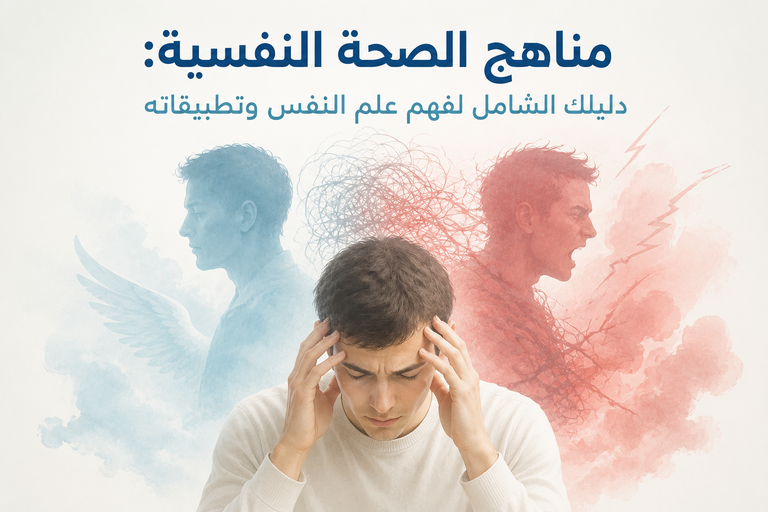
Mental Health Approaches: Your Complete Guide to Understanding Psychology and Its Applications
In a world where psychological pressures and social challenges are increasingly discussed, Mental Health Approaches provide useful frameworks for understanding human behavior, promoting psychological well-being, and responding more consciously to stress and mental health concerns.
Interest in mental health is no longer limited to psychiatrists or psychologists. Basic knowledge in this area can also be valuable in education, workplaces, parenting, and personal development, while diagnosis and psychological treatment remain the responsibility of appropriately qualified professionals.
As mental health studies expand across universities and digital learning platforms, it is increasingly useful to understand the main approaches used to organize this field and how their principles relate to professional and personal life without confusing theoretical learning with clinical practice.
What Are Mental Health Approaches and Why Is Studying Them Important?
Mental Health Approaches can be understood as different frameworks used to study behavior and psychological well-being, promote healthy development, reduce risk factors, and understand the role of professional assessment and treatment when mental health disorders are present.
Studying mental health can help learners:
- Understand some of the factors that influence human behavior and mental well-being.
- Develop stronger stress-management and coping skills.
- Recognize signs that may indicate the need for professional assessment or support.
- Develop communication and non-clinical support skills.
- Contribute to more psychologically supportive environments in families, workplaces, and educational institutions.
This knowledge can also be useful in education, counseling-related settings, human resources, healthcare, and management, although the permitted level of application depends on a person's qualifications and professional role.
What Are the Main Mental Health Study Approaches?
Mental health can be studied through different frameworks, including developmental, preventive, and therapeutic approaches. Each focuses on a different aspect of promoting mental health, reducing risk, or providing professional treatment, alongside applications associated with Applied Psychology and psychological counseling.
What Are the Most Important Mental Health Approaches?
Mental Health Approaches can be organized into complementary directions, ranging from supporting healthy development and psychological well-being to prevention and, when necessary, professional assessment and treatment.
| Approach | Main Goal | Application Areas |
|---|---|---|
| Developmental Approach | Supporting psychological growth, skills, and adjustment | Schools, families, development, and support programs |
| Preventive Approach | Reducing risk factors and strengthening protective factors and awareness | Communities, educational institutions, healthcare, and workplaces |
| Therapeutic Approach | Assessment, diagnosis, and treatment by qualified professionals | Clinics, hospitals, and mental health centers |
The Developmental Approach and Its Goals
The developmental approach focuses on supporting psychological and social abilities across different stages of life and developing skills that can help people adapt and respond more effectively to challenges.
Its main objectives may include:
- Supporting self-confidence and self-awareness.
- Developing emotional and social skills.
- Improving decision-making and problem-solving skills.
- Supporting healthy psychological and social development in children and adolescents.
- Promoting supportive educational and social environments.
This perspective can be useful in schools, family support settings, and personal development programs and represents an important part of mental health studies.
The Preventive Approach for Supporting Individuals and Communities
The preventive approach in mental health focuses on strengthening protective factors and reducing risks before problems become more severe. It can include awareness, coping skills, supportive environments, and early access to appropriate help.
The preventive approach may focus on:
- Improving mental health awareness.
- Developing stress-management and coping skills.
- Supporting healthy family and social relationships.
- Strengthening psychological resilience and adaptation.
- Contributing to efforts that reduce risk factors associated with bullying, addiction, and emotional abuse.
This approach is relevant to educational institutions, workplaces, healthcare settings, and communities because it emphasizes mental health promotion and early support rather than waiting for difficulties to become more severe.
The Therapeutic Approach for Mental Health Disorders
The therapeutic approach focuses on assessing and diagnosing mental health conditions and developing an appropriate treatment plan through qualified professionals. The type of intervention varies according to the condition, diagnosis, and individual needs.
Depending on professional assessment, mental health treatment may involve:
- Cognitive Behavioral Therapy and other forms of psychotherapy.
- Individual or group psychotherapy when appropriate.
- Psychological or family counseling in suitable contexts.
- Psychological rehabilitation and support programs.
- Supportive interventions and crisis management delivered by appropriately trained professionals.
Studying these interventions is part of understanding Applied Psychology and mental health, but theoretical knowledge alone does not authorize a learner to diagnose mental disorders or independently provide psychotherapy.
Appropriate treatment depends on the individual's needs and medical situation and may involve psychotherapy, medication, or a combination of interventions under professional guidance.
What Is the Difference Between Preventive and Therapeutic Approaches in Psychology?
The preventive and therapeutic approaches differ mainly in their focus. Prevention aims to promote mental health, reduce risk factors, strengthen protective factors, and encourage early support, while the therapeutic approach addresses conditions that require professional assessment, diagnosis, and treatment.
Although their roles differ, prevention and treatment are complementary parts of mental healthcare alongside mental health promotion and psychological well-being.
How Does the Preventive Approach Work?
The preventive approach promotes mental health awareness, coping and stress-management skills, and protective factors at individual, family, and community levels. It also encourages people to seek professional help when concerning symptoms appear.
How Does the Therapeutic Approach Work?
The therapeutic approach begins with appropriate professional assessment and then selects an intervention according to the diagnosis and the individual's needs. Treatment may involve psychotherapy, medication, rehabilitation, supportive care, or a combination of approaches delivered within an appropriate professional framework.
How Can You Benefit Professionally from Studying Mental Health Approaches?
Studying mental health can provide useful knowledge for educational, social, healthcare, and professional environments, particularly as psychological well-being receives greater attention across institutions.
Potential professional benefits include:
1. Understanding Diverse Professional Fields
Professionals who already hold the appropriate academic and professional qualifications in psychology, mental health, social work, or education may use this knowledge in settings such as:
- Counseling and psychological support centers within their professional scope.
- Schools and universities.
- Hospitals and healthcare settings where role and licensing requirements are met.
- Social and community organizations.
- Human resources and employee well-being programs.
- Awareness, support, and organizational development initiatives.
Completing a training course or diploma alone does not automatically qualify someone to work as a psychiatrist, psychologist, or psychotherapist. These professions are subject to academic, clinical, professional, and regulatory requirements that vary by country.
2. Developing Communication and Behavior-Understanding Skills
Mental Health Approaches can help learners develop a broader understanding of behavior, communication, stress, and adaptation. These skills can support professional and interpersonal communication without replacing specialist psychological assessment.
3. Exploring Applied Psychology
This field provides an opportunity to explore applications of Applied Psychology in education, workplaces, counseling-related environments, and community support. The level of professional application depends on a person's qualifications, training, supervision, and licensing.
4. Flexible Online Learning
People interested in mental health can study relevant topics online through digital courses and training programs, including the IGTS Mental Health Diploma. Online professional training should be distinguished from an academic degree or professional license when the goal is to enter a regulated mental health profession.
Read Also
How Can You Study Psychology and Mental Health Online?
Psychology and mental health topics can be studied online through digital courses, professional training programs, and academic learning platforms. If the goal is to earn an academic degree or enter a regulated mental health profession, learners should separately verify institutional recognition, academic requirements, clinical training, and licensing rules in their country.
Why Is Interest in Mental Health Growing in the Arab World?
Mental health has received increasing attention in Saudi Arabia, the Gulf region, Egypt, and other Arab communities as discussions about psychological well-being and the impact of stress on education, work, and daily life become more visible.
Awareness campaigns and the wider availability of mental health content have also helped make conversations about psychological support more common and may contribute to reducing some of the stigma associated with seeking help.
As a result, training programs in mental health attract students and professionals interested in developing their knowledge, although general training should not be confused with the clinical qualifications required for professional practice.
How Do You Choose the Right Mental Health Program?
Before enrolling in a training or academic program, consider:
- The education or training provider and the status of any certificate or accreditation offered.
- The clarity of the curriculum and learning objectives.
- Whether practical applications or case studies are actually included in the advertised program.
- Study flexibility and the learning format.
- How well the program aligns with your educational and professional goals.
- Whether additional certificates or accreditations involve separate requirements or fees.
If your goal is to diagnose mental disorders, provide psychotherapy, or work under a regulated mental health title, independently confirm the degree, supervised clinical training, registration, and licensing requirements that apply in your country.
The Future of Mental Health Studies
Mental health continues to receive attention across education, healthcare, workplaces, and community settings, increasing the value of high-quality knowledge and training in this field.
As online learning and digital services continue to develop, opportunities to study Mental Health Approaches have become more diverse, while professional clinical practice remains dependent on the qualifications, supervised training, experience, and regulatory requirements applicable in each country.
Start Now
If you want to develop your knowledge of mental health, human behavior, psychological adjustment, prevention, and support, explore the IGTS Mental Health Diploma and see how its curriculum fits your learning goals.
Mental Health Diploma Contact Us via WhatsAppUpdated at: 2026-10-10 16:30:46