
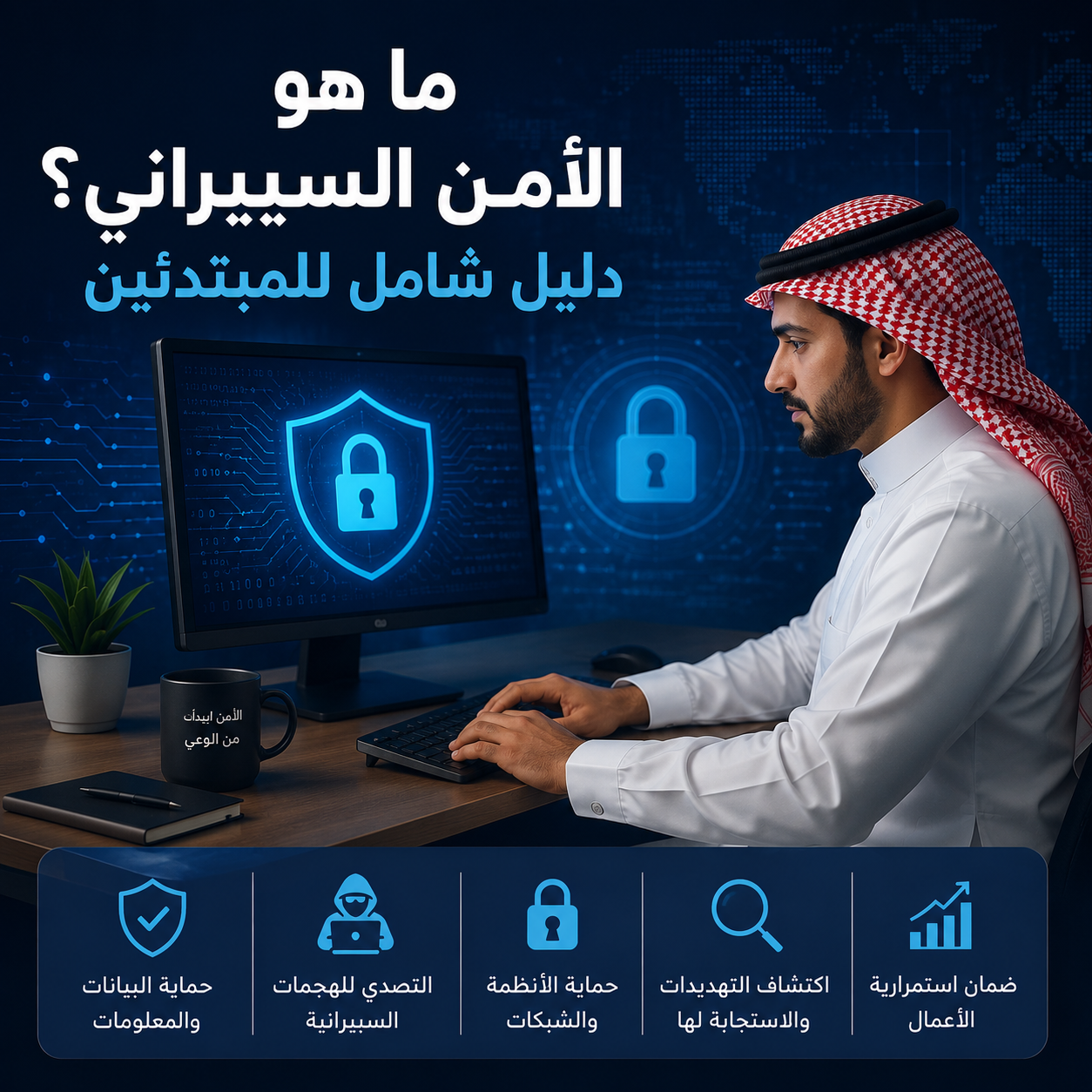
ما هو الأمن السيبراني؟ دليل شامل للمبتدئين 2026
إذا كنت تتساءل: ما هو الأمن السيبراني؟ ولماذا أصبح من أكثر التخصصات طلبًا في السعودية؟ فهذا الدليل سيساعدك على فهم المجال بطريقة بسيطة وعملية، سواء كنت تفكر في دراسة أمن سيبراني أو تبحث عن مسار مهني مستقبلي.
تعريف الأمن السيبراني بكلمات بسيطة
ببساطة، الأمن السيبراني هو مجموعة من الممارسات والتقنيات التي تهدف إلى حماية الأجهزة، الشبكات، الأنظمة، والتطبيقات، والبيانات من الهجمات الإلكترونية أو الوصول غير المصرح به.
تخيل أن بياناتك الشخصية أو حسابك البنكي موجودان داخل “منزل رقمي”، هنا يأتي دور الأمن السيبراني كالباب والقفل ونظام الحماية الذي يمنع أي شخص غير مصرح له من اقتحام هذا المنزل أو سرقة ما بداخله.
يشمل مجال الأمن السيبراني حماية الهواتف الذكية، أجهزة الكمبيوتر، الخوادم، الشبكات، التطبيقات، والبيانات الحساسة. ولهذا السبب أصبح بحث عن الامن السيبراني من أكثر الموضوعات التي يهتم بها الطلاب والخريجون، خاصة مع زيادة فرص العمل في هذا المجال.
لماذا أصبح الأمن السيبراني ضرورة لا خيار؟
قبل سنوات، كان الاهتمام بالحماية الرقمية يُنظر إليه أحيانًا على أنه خيار إضافي. أما اليوم، فقد أصبح الأمن السيبراني ضرورة أساسية للأفراد والشركات والجهات الحكومية، لأن الهجمات الإلكترونية أصبحت أكثر تطورًا وانتشارًا.
في الواقع السعودي، تعتمد الشركات والبنوك والجهات الحكومية بشكل كبير على الأنظمة الرقمية. وأي اختراق قد يؤدي إلى خسائر مالية ضخمة، أو تسريب بيانات حساسة، أو تعطيل خدمات يعتمد عليها آلاف المستخدمين.
وتظهر أهمية الأمن السيبراني في عدة جوانب، منها:
- حماية المعلومات الشخصية من السرقة أو الاستغلال.
- حماية الحسابات البنكية والمعاملات المالية.
- حماية الشركات من الهجمات الإلكترونية وخسائرها.
- منع سرقة البيانات أو تسريبها.
- حماية الأنظمة الحكومية والخدمات الرقمية.
- ضمان استمرارية الأعمال وتقليل توقف الأنظمة.
- تعزيز ثقة العملاء في الخدمات الإلكترونية.
ومع التوسع الرقمي ضمن رؤية السعودية 2030، زاد الاستثمار في الأمن السيبراني، مما رفع الطلب على المتخصصين في المجال وفتح فرصًا مهنية قوية للشباب والخريجين.
أنواع تهديدات الأمن السيبراني
لفهم ما هو الأمن السيبراني بشكل أفضل، يجب أن نعرف نوع التهديدات التي يحاول هذا المجال التعامل معها. فالهجمات الإلكترونية ليست نوعًا واحدًا، بل تشمل أشكالًا متعددة تختلف حسب الهدف وطريقة التنفيذ.
1. التصيد الاحتيالي Phishing
التصيد الاحتيالي من أكثر أنواع الهجمات شيوعًا، ويحدث غالبًا من خلال رسائل بريد إلكتروني أو روابط مزيفة تحاول خداع المستخدم لإدخال كلمة المرور أو بياناته البنكية.
2. البرمجيات الخبيثة Malware
البرمجيات الخبيثة هي برامج ضارة تصيب الأجهزة أو الأنظمة، مثل الفيروسات وبرامج التجسس، وقد تُستخدم لسرقة البيانات أو تعطيل الجهاز أو مراقبة المستخدم دون علمه.
3. هجمات الفدية Ransomware
في هذا النوع من الهجمات، يقوم المهاجم بتشفير ملفات الضحية أو نظام الشركة، ثم يطلب مبلغًا ماليًا مقابل فك التشفير. وقد تتسبب هذه الهجمات في تعطيل أعمال الشركات لفترات طويلة.
4. اختراق كلمات المرور
يحاول المهاجمون الوصول إلى الحسابات من خلال تخمين كلمات المرور أو سرقتها أو استخدام بيانات مسربة سابقًا. لذلك يُعد استخدام كلمات مرور قوية وتفعيل المصادقة الثنائية من أساسيات الحماية.
5. هجمات الشبكات
تستهدف هذه الهجمات البنية التحتية للشبكات بهدف تعطيل الخدمات، أو سرقة البيانات، أو الوصول غير المصرح به إلى الأنظمة المتصلة بالشبكة.
6. الهندسة الاجتماعية
تعتمد الهندسة الاجتماعية على خداع الإنسان بدلًا من اختراق النظام مباشرة. فقد يتواصل المهاجم مع الموظف ويدّعي أنه من الدعم الفني للحصول على كلمة المرور أو معلومات داخلية حساسة.
كل هذه التهديدات توضح أهمية الأمن السيبراني في حماية الأفراد والمؤسسات من الخسائر والمخاطر الرقمية.
اقرأ أيضًا
تخصصات الأمن السيبراني ومجالاته
من أكبر مميزات مجال الأمن السيبراني أنه متنوع، ولا يقتصر على مسار واحد فقط. فإذا كنت تفكر في دراسة أمن سيبراني، فهناك عدة تخصصات يمكنك الاختيار من بينها حسب اهتماماتك وقدراتك.
أمن الشبكات
يركز أمن الشبكات على حماية البنية التحتية للشبكات من الاختراق أو التعطيل، ويشمل مراقبة حركة البيانات، تأمين الاتصالات، واكتشاف أي نشاط غير طبيعي.
اختبار الاختراق Penetration Testing
يقوم مختص اختبار الاختراق بمحاكاة الهجمات الإلكترونية بطريقة قانونية ومنظمة لاكتشاف الثغرات قبل أن يستغلها المهاجمون الحقيقيون.
التحليل الجنائي الرقمي
يهتم هذا المجال بتتبع الأدلة الرقمية بعد حدوث الاختراق، وتحليل ما حدث، ومعرفة مصدر الهجوم، وكيفية منع تكراره مستقبلًا.
أمن التطبيقات
يركز أمن التطبيقات على حماية المواقع والتطبيقات من الثغرات البرمجية التي قد تسمح للمهاجمين بالوصول إلى بيانات المستخدمين أو التحكم في النظام.
إدارة المخاطر الأمنية
يهتم هذا المجال بتحليل المخاطر الأمنية داخل المؤسسة، وتحديد أولويات الحماية، ووضع السياسات والإجراءات التي تقلل احتمالات الهجمات أو آثارها.
الاستجابة للحوادث
يركز هذا التخصص على التعامل مع الهجمات عند حدوثها، واحتواء الضرر، واستعادة الأنظمة، وتحليل أسباب الحادث الأمني.
ما الفرق بين أمن المعلومات والأمن السيبراني؟
كثيرون يخلطون بين أمن المعلومات والأمن السيبراني، لكن الفرق بينهما بسيط. أمن المعلومات يهتم بحماية المعلومات بجميع أشكالها، سواء كانت رقمية أو ورقية، بينما يركز الأمن السيبراني على حماية الأنظمة والبيانات الرقمية من الهجمات الإلكترونية.
على سبيل المثال، ملف ورقي محفوظ داخل خزنة يدخل ضمن نطاق أمن المعلومات، أما ملف محفوظ على خادم رقمي ومحمي من الاختراق، فهو يدخل ضمن نطاق الأمن السيبراني.
يمكن القول إن الأمن السيبراني جزء من أمن المعلومات، لكنه أكثر تخصصًا في حماية البيئة الرقمية والشبكات والأنظمة المتصلة بالإنترنت.
الأمن السيبراني في سوق العمل السعودي
تُعد السعودية من الدول التي تشهد نموًا سريعًا في مجال الأمن السيبراني، خاصة مع التحول الرقمي الكبير وتوسع الخدمات الإلكترونية في مختلف القطاعات. لذلك أصبحت الشركات تبحث باستمرار عن مختصين قادرين على حماية البيانات والأنظمة من التهديدات.
ومن أبرز الجهات التي توظف متخصصي الأمن السيبراني في السعودية:
- البنوك والمؤسسات المالية.
- شركات الاتصالات.
- شركات التقنية.
- الجهات الحكومية.
- القطاع الصحي.
- شركات التجارة الإلكترونية.
- شركات الطاقة والصناعة.
ومن أشهر الوظائف في المجال:
- محلل أمن سيبراني.
- مختبر اختراق.
- مهندس أمن معلومات.
- محلل استجابة للحوادث.
- مستشار مخاطر أمنية.
- مختص أمن تطبيقات.
وهذا يفسر ارتفاع معدلات بحث عن الامن السيبراني بين الشباب في السعودية، لأنه أصبح من المجالات التقنية المهمة التي تجمع بين الطلب العالي والتطور المستمر والفرص المهنية المتنوعة.
كيف تبدأ مسارك في الأمن السيبراني؟
إذا كنت مهتمًا بدخول المجال، فالبداية لا تحتاج إلى تعقيد. يمكنك أن تبدأ بخطوات واضحة تساعدك على بناء أساس قوي في الأمن السيبراني.
1. تعلم أساسيات الشبكات
ابدأ بفهم كيفية انتقال البيانات بين الأجهزة، وما هي عناوين IP، وكيف تعمل الشبكات، لأن جزءًا كبيرًا من الأمن السيبراني يعتمد على حماية الشبكات والاتصالات.
2. تعلم أنظمة التشغيل
من المهم فهم أنظمة التشغيل مثل Windows وLinux، لأن كثيرًا من أدوات الأمن السيبراني تعتمد على التعامل مع هذه الأنظمة وتحليل سلوكها.
3. تعلم أساسيات البرمجة
تعلم البرمجة، خاصة Python، يمنحك ميزة قوية في المجال، لأنها تساعدك على أتمتة المهام، تحليل البيانات الأمنية، وفهم طريقة عمل بعض الثغرات.
4. فهم الهجمات الإلكترونية
تعلم كيف تحدث الهجمات الإلكترونية، وما هي أشهر الأساليب التي يستخدمها المهاجمون، وكيف يمكن اكتشافها ومنعها. هذا الفهم يساعدك على التفكير مثل المدافع وليس مثل المستخدم العادي فقط.
5. الالتحاق بدبلوم متخصص
أفضل خطوة عملية هي الانضمام إلى دبلوم الأمن السيبراني المعتمد من IGTS لتعلم المجال بشكل منظم واحترافي، بدلًا من التعلم العشوائي من مصادر متفرقة.
المهارات التي تحتاجها لدخول مجال الأمن السيبراني
إذا كنت تفكر في دخول مجال الأمن السيبراني، فمن المهم أن تعرف أن النجاح فيه لا يعتمد فقط على الدراسة الأكاديمية، بل يحتاج إلى مجموعة من المهارات العملية والتحليلية.
أول مهارة أساسية هي فهم الشبكات، لأن جزءًا كبيرًا من الأمن السيبراني يعتمد على معرفة كيفية انتقال البيانات بين الأجهزة وكيف يمكن استغلال الثغرات داخل الشبكات. كذلك تحتاج إلى فهم أنظمة التشغيل مثل Linux وWindows، لأن كثيرًا من عمليات الحماية أو الاختبار تتم من خلالها.
إلى جانب ذلك، تُعد مهارة التفكير التحليلي من أهم المهارات في الأمن السيبراني، لأن المتخصص يحتاج إلى تحليل السلوكيات غير الطبيعية واكتشاف التهديدات قبل أن تتحول إلى اختراق فعلي. كما أن تعلم البرمجة، خاصة Python، يمنحك ميزة قوية في أتمتة المهام وتحليل البيانات الأمنية.
كيف تستخدم الشركات السعودية الأمن السيبراني؟
مع التوسع الرقمي في المملكة، أصبحت الشركات تعتمد بشكل كبير على الأمن السيبراني لحماية بياناتها وأنظمتها. فالبنوك تستخدم تقنيات متقدمة لرصد العمليات المشبوهة ومنع الاحتيال المالي، بينما تعتمد شركات التجارة الإلكترونية على حلول الأمن السيبراني لحماية بيانات العملاء وعمليات الدفع الإلكتروني.
في القطاع الصحي، أصبح الأمن السيبراني ضروريًا لحماية السجلات الطبية الحساسة، وفي الجهات الحكومية يتم استخدامه لحماية الأنظمة الوطنية والخدمات الرقمية من الهجمات. هذا الاستخدام الواسع يوضح أهمية الأمن السيبراني في استقرار الأعمال وضمان استمراريتها، ويؤكد أن المجال لم يعد مقتصرًا على شركات التقنية فقط.
هل الأمن السيبراني مناسب لك كمسار مهني؟
إذا كنت تستمتع بحل المشكلات، والتفكير المنطقي، وتحليل التفاصيل، فقد يكون الأمن السيبراني من أفضل الخيارات المهنية لك. المجال مناسب للأشخاص الذين لديهم فضول لفهم كيف تعمل الأنظمة وكيف يمكن حمايتها من التهديدات.
من أهم مميزات الأمن السيبراني أنه مجال سريع التطور، مما يعني أنك ستتعلم باستمرار وتكتسب مهارات جديدة بشكل دائم. كما أن الطلب عليه في السعودية والعالم في تزايد مستمر، مما يجعله خيارًا قويًا لبناء مستقبل مهني مستقر ومطلوب.
الأسئلة الشائعة حول الأمن السيبراني
ما هو الأمن السيبراني بكلمات بسيطة؟
الأمن السيبراني هو حماية الأنظمة والشبكات والأجهزة والبيانات من الهجمات الإلكترونية أو الوصول غير المصرح به.
ما أهمية الأمن السيبراني في حياتنا اليومية؟
تكمن أهمية الأمن السيبراني في حماية بياناتنا الشخصية، حساباتنا البنكية، أجهزتنا، ومعاملاتنا الإلكترونية من الاختراق أو السرقة أو الاستغلال.
ما الفرق بين الأمن السيبراني وأمن المعلومات؟
أمن المعلومات أوسع، لأنه يهتم بحماية المعلومات بجميع أشكالها، بينما يركز الأمن السيبراني على حماية البيانات والأنظمة الرقمية من الهجمات الإلكترونية.
ما هي تخصصات الأمن السيبراني؟
من أشهر تخصصات الأمن السيبراني: أمن الشبكات، اختبار الاختراق، التحليل الجنائي الرقمي، أمن التطبيقات، إدارة المخاطر، والاستجابة للحوادث.
كم راتب متخصص الأمن السيبراني في السعودية؟
يختلف راتب متخصص الأمن السيبراني في السعودية حسب الخبرة، المدينة، جهة العمل، الشهادات المهنية، وطبيعة الدور الوظيفي. لكن بشكل عام، يُعد المجال من المجالات التقنية ذات الرواتب التنافسية مقارنة بكثير من المسارات الأخرى.
ابدأ مستقبلك في الأمن السيبراني
مع تزايد الهجمات الرقمية واعتماد الشركات على التكنولوجيا، أصبح الأمن السيبراني من أهم تخصصات المستقبل في السعودية. فإذا كنت تبحث عن مجال قوي، مطلوب، وله مستقبل واعد، فقد يكون هذا التخصص هو الخيار المناسب لك.
ابدأ بتعلم الأساسيات، افهم طبيعة التهديدات، طوّر مهاراتك التقنية والتحليلية، ثم التحق ببرنامج تدريبي منظم يساعدك على الانتقال من مرحلة الفهم إلى التطبيق العملي.
ابدأ الآن
احصل على دبلوم الأمن السيبراني المعتمد وابدأ بناء مستقبلك المهني في واحد من أهم تخصصات المستقبل.
تاريخ اخر تحديث: 2026-10-10 10:20:47