
الفئات
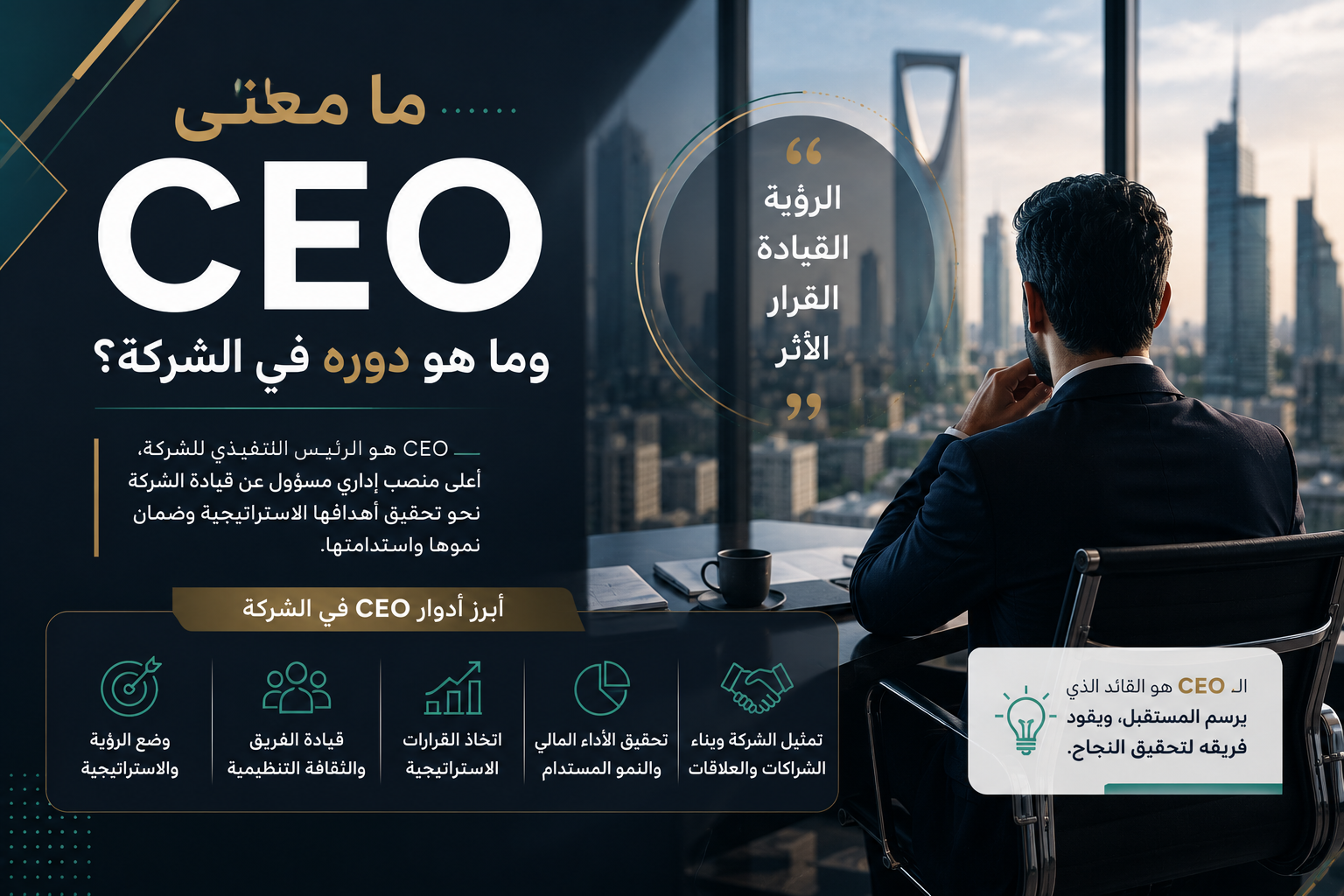
ما معنى CEO وما هو دوره في الشركة؟
عند قراءة الأخبار الاقتصادية أو متابعة الشركات الكبرى، ستلاحظ تكرار مصطلح CEO بشكل مستمر. فقد تسمع عن تعيين CEO جديد لشركة، أو تصريحات الرئيس التنفيذي حول خطط النمو والتوسع، لكن ما المقصود بهذا المسمى؟ وهل يختلف عن المدير العام أو المدير التنفيذي؟
في الواقع، يُعد CEO أعلى منصب تنفيذي في معظم الشركات، وهو المسؤول عن قيادة المؤسسة وتحويل رؤيتها إلى خطط ونتائج عملية. ومع تطور قطاع الأعمال في المملكة العربية السعودية وازدياد عدد الشركات الناشئة والمؤسسات الكبرى، أصبح فهم هذا الدور مهمًا لكل من يطمح إلى بناء مسار مهني في الإدارة.
في هذا الدليل ستتعرف على معنى CEO، وأهم مسؤولياته، والفرق بينه وبين المناصب الإدارية الأخرى، والخطوات التي تساعدك على الوصول إلى هذا المنصب مستقبلًا.
تعريف CEO؟
يرمز CEO إلى عبارة Chief Executive Officer، والتي تُترجم إلى الرئيس التنفيذي.
ويُعد الرئيس التنفيذي أعلى مسؤول تنفيذي في الشركة، حيث يتولى قيادة المؤسسة والإشراف على تنفيذ استراتيجيتها وتحقيق أهدافها، مع ضمان التنسيق بين الإدارات المختلفة واتخاذ القرارات التي تؤثر في مستقبل الشركة.
ورغم أن طبيعة عمل CEO تختلف من شركة إلى أخرى، فإن الهدف الأساسي يظل واحدًا، وهو قيادة المؤسسة نحو النمو والاستدامة وتحقيق النتائج.
ماذا يفعل CEO؟
يتولى الرئيس التنفيذي مسؤوليات متعددة، من أبرزها:
- وضع الرؤية والاستراتيجية العامة للشركة.
- اتخاذ القرارات الإدارية المهمة.
- قيادة فريق الإدارة العليا.
- متابعة الأداء المالي والتشغيلي.
- تمثيل الشركة أمام المستثمرين والشركاء.
- الإشراف على تنفيذ الخطط والمشروعات.
- إدارة المخاطر واتخاذ القرارات الاستراتيجية.
- دعم الابتكار وتحسين الأداء.
ولا يعني ذلك أن CEO يدير كل التفاصيل اليومية بنفسه، بل يعتمد على مديري الإدارات المختلفة، بينما يركز هو على الصورة الأكبر ومستقبل المؤسسة.
لماذا يُعد دور CEO مهمًا؟
نجاح أي شركة لا يعتمد فقط على جودة منتجاتها أو خدماتها، بل أيضًا على جودة القيادة.
فالرئيس التنفيذي هو من يحدد الاتجاه العام للشركة، ويوازن بين النمو وتحقيق الأرباح، ويقود المؤسسة خلال التحديات والتغيرات الاقتصادية.
وفي الشركات الكبرى، قد تؤثر قرارات CEO في آلاف الموظفين وملايين العملاء، لذلك يتطلب هذا المنصب خبرة واسعة وقدرة عالية على القيادة واتخاذ القرار.
مهام وصلاحيات CEO
تشمل مسؤوليات الرئيس التنفيذي جوانب استراتيجية وإدارية متعددة، ومن أهمها:
وضع استراتيجية الشركة
يحدد CEO الأهداف طويلة المدى، ويضع الخطط التي تساعد الشركة على تحقيق النمو وزيادة قدرتها التنافسية.
قيادة فرق العمل
يعمل مع المديرين التنفيذيين في مختلف الإدارات لضمان تنفيذ الخطط وتحقيق مؤشرات الأداء المستهدفة.
اتخاذ القرارات الاستراتيجية
من مسؤولياته اتخاذ القرارات المتعلقة بالتوسع، والاستثمارات، وإطلاق المنتجات الجديدة، والدخول إلى أسواق جديدة.
إدارة الموارد
يشرف على استخدام الموارد المالية والبشرية بالشكل الذي يحقق أفضل النتائج للمؤسسة.
تمثيل الشركة
يمثل CEO الشركة أمام المستثمرين، والعملاء الرئيسيين، والجهات الحكومية، ووسائل الإعلام، ويعكس رؤيتها وقيمها أمام مختلف الأطراف.
متابعة الأداء
يقيس نتائج الشركة بشكل مستمر، ويتابع التقارير المالية والتشغيلية، ويعمل على معالجة التحديات وتحسين الأداء.
الفرق بين CEO وMD وGM
من أكثر الأمور التي تسبب التباسًا هو استخدام مسميات CEO وMD وGM على أنها تعني الشيء نفسه، بينما تختلف مسؤوليات كل منصب حسب هيكل الشركة وطبيعة أعمالها.
يوضح الجدول التالي أبرز الفروقات:
| العنصر | CEO (الرئيس التنفيذي) | MD (العضو المنتدب / المدير المنتدب) | GM (المدير العام) |
|---|---|---|---|
| المستوى الإداري | أعلى منصب تنفيذي | إدارة تنفيذية عليا | إدارة تشغيلية |
| المسؤولية الأساسية | قيادة الشركة ووضع الاستراتيجية | الإشراف على تنفيذ قرارات مجلس الإدارة وإدارة الشركة | إدارة العمليات اليومية وإدارة الإدارات |
| اتخاذ القرارات | قرارات استراتيجية طويلة المدى | قرارات تنفيذية وإدارية | قرارات تشغيلية |
| التقارير | يقدم تقاريره لمجلس الإدارة | غالبًا لمجلس الإدارة أو CEO | غالبًا للرئيس التنفيذي أو العضو المنتدب |
| التركيز | مستقبل الشركة والنمو | تنفيذ الخطط الاستراتيجية | كفاءة التشغيل وتحقيق الأهداف اليومية |
قد تختلف هذه المسميات من شركة إلى أخرى، لكن يبقى الرئيس التنفيذي (CEO) هو المسؤول الأول عن قيادة المؤسسة وتحقيق رؤيتها.
كيف تصبح CEO؟
الوصول إلى منصب الرئيس التنفيذي لا يحدث بين ليلة وضحاها، بل يكون نتيجة سنوات من التعلم واكتساب الخبرة وتطوير المهارات القيادية.
ومن أهم الخطوات التي تساعدك على بناء هذا المسار:
1. الحصول على أساس أكاديمي مناسب
يدرس كثير من الرؤساء التنفيذيين تخصصات مثل:
- إدارة الأعمال.
- المالية.
- المحاسبة.
- الهندسة.
- التسويق.
- تقنية المعلومات.
لكن لا يشترط تخصص معين، فالكفاءة والخبرة تلعبان دورًا كبيرًا.
2. اكتساب الخبرة العملية
يبدأ معظم الرؤساء التنفيذيين في مناصب إشرافية أو إدارية، ثم يتدرجون في المسؤوليات حتى يصلوا إلى الإدارة العليا.
3. تطوير المهارات القيادية
لا يعتمد نجاح CEO على المعرفة الفنية فقط، بل يحتاج إلى مجموعة من المهارات، أهمها:
- القيادة.
- اتخاذ القرار.
- التفكير الاستراتيجي.
- إدارة الأزمات.
- التواصل الفعال.
- التفاوض.
- إدارة فرق العمل.
- الذكاء العاطفي.
4. التعلم المستمر
يتغير عالم الأعمال باستمرار، لذلك يحرص القادة التنفيذيون على تطوير معارفهم من خلال البرامج التدريبية والشهادات المهنية والدراسات العليا مثل MBA وغيرها من البرامج الإدارية.
هل كل مؤسس شركة هو CEO؟
ليس بالضرورة.
في كثير من الشركات الناشئة يكون المؤسس هو الرئيس التنفيذي في البداية، لكن مع نمو الشركة قد يتم تعيين CEO محترف يمتلك خبرة في قيادة المؤسسات الكبيرة، بينما ينتقل المؤسس إلى دور آخر مثل رئيس مجلس الإدارة أو عضو في المجلس.
مقالات مرتبطة
إذا كنت ترغب في التعرف على المسارات الإدارية بشكل أوسع، يمكنك قراءة مقال إدارة الأعمال والمسار الوظيفي.
كما يمكنك الاطلاع على مقال MBA للتعرف على أهمية دراسة إدارة الأعمال ودورها في تطوير المهارات القيادية والإدارية.
اقرأ أيضًا
كما يمكنك استكشاف برامج ودورات إدارة الأعمال في IGTS، أو الالتحاق بـ ماجستير إدارة الأعمال MBA لتطوير مهاراتك القيادية والاستراتيجية.
الأسئلة الشائعة
ما معنى CEO بالعربي؟
CEO هو اختصار لعبارة Chief Executive Officer، ويعني الرئيس التنفيذي، وهو أعلى مسؤول تنفيذي في الشركة ويتولى قيادة المؤسسة وتحقيق أهدافها الاستراتيجية.
ما الفرق بين CEO وMD؟
الرئيس التنفيذي (CEO) يقود الشركة ويحدد استراتيجيتها العامة، بينما يركز المدير المنتدب (MD) غالبًا على تنفيذ قرارات مجلس الإدارة والإشراف على إدارة الشركة وفقًا لهيكلها التنظيمي.
كم راتب CEO في السعودية؟
تختلف رواتب الرؤساء التنفيذيين بشكل كبير حسب حجم الشركة والقطاع والخبرة. ففي الشركات المتوسطة قد تبدأ الرواتب من عشرات الآلاف من الريالات شهريًا، بينما قد تصل في الشركات الكبرى إلى مئات الآلاف شهريًا، بالإضافة إلى المكافآت والحوافز.
ما المهارات التي يحتاجها CEO؟
من أهم المهارات: القيادة، والتخطيط الاستراتيجي، واتخاذ القرار، وإدارة فرق العمل، والتواصل، وإدارة الأزمات، والقدرة على تحليل البيانات واتخاذ قرارات مبنية على المعلومات.
هل يمكن أن يكون CEO مؤسس الشركة؟
نعم، كثير من مؤسسي الشركات يشغلون منصب الرئيس التنفيذي، خاصة في المراحل الأولى من عمر الشركة، لكن قد يتم تعيين رئيس تنفيذي آخر مع توسع الأعمال إذا اقتضت احتياجات النمو ذلك.
طوّر مهاراتك القيادية مع IGTS
إذا كنت تطمح إلى الوصول إلى المناصب القيادية في المستقبل، فإن بناء المهارات الإدارية وتطوير قدراتك في القيادة واتخاذ القرار يمثلان خطوة أساسية في هذا المسار. فالقادة الناجحون لا يعتمدون على الخبرة فقط، بل يحرصون على التعلم المستمر ومواكبة أحدث ممارسات الإدارة.
ابدأ رحلتك مع البرامج والدورات التدريبية في الإدارة والأعمال من IGTS، واستفد من محتوى تدريبي يساعدك على تطوير مهارات القيادة، والتخطيط، وإدارة الفرق، بما يدعم تقدمك المهني.
ابدأ الآن
طوّر مهاراتك القيادية والإدارية من خلال ماجستير إدارة الأعمال MBA من IGTS، واستعد للوصول إلى المناصب التنفيذية بثقة.
تاريخ اخر تحديث: 2026-10-10 17:14:59